Status Scope of services. Nothing on this site is a record of completed work.
About
Why an asset-light practice exists at all: the gap between a fabricator's system of record and a contractor's, and what it costs a client when nobody owns the space between them.
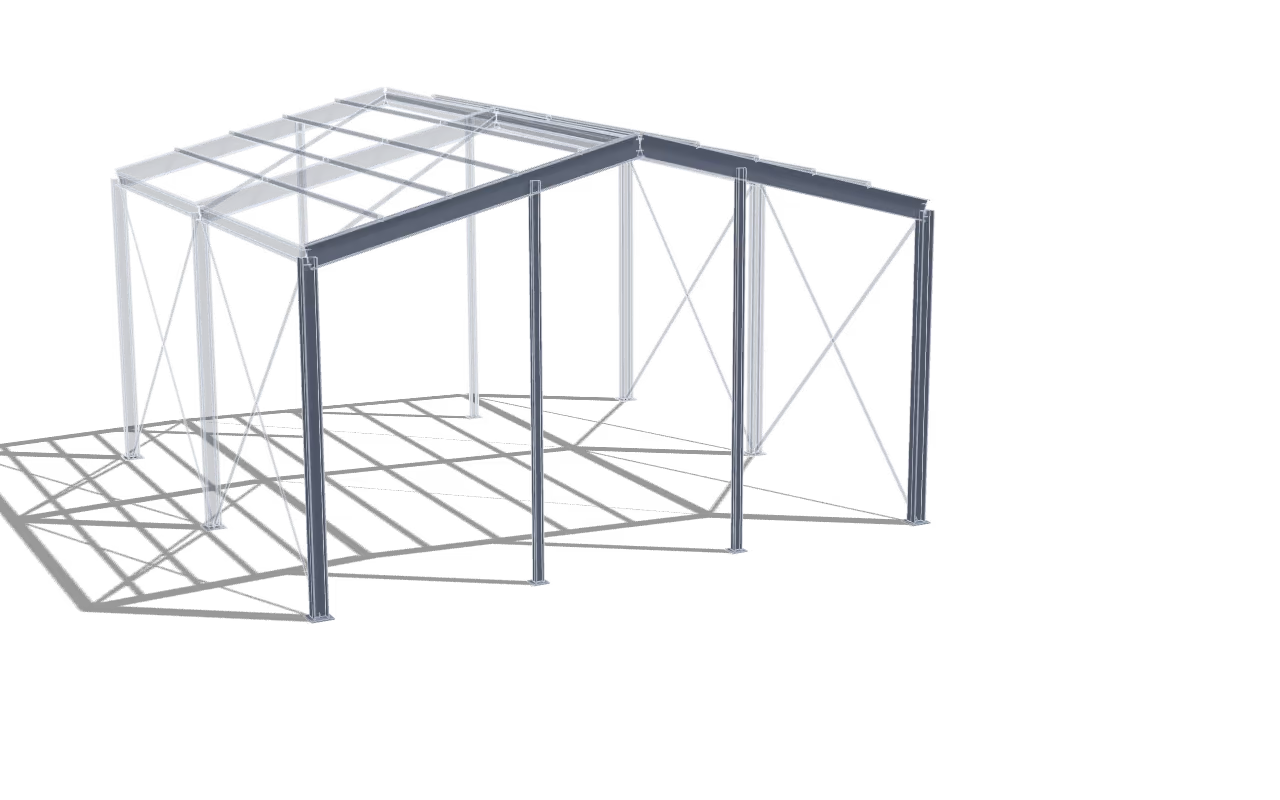
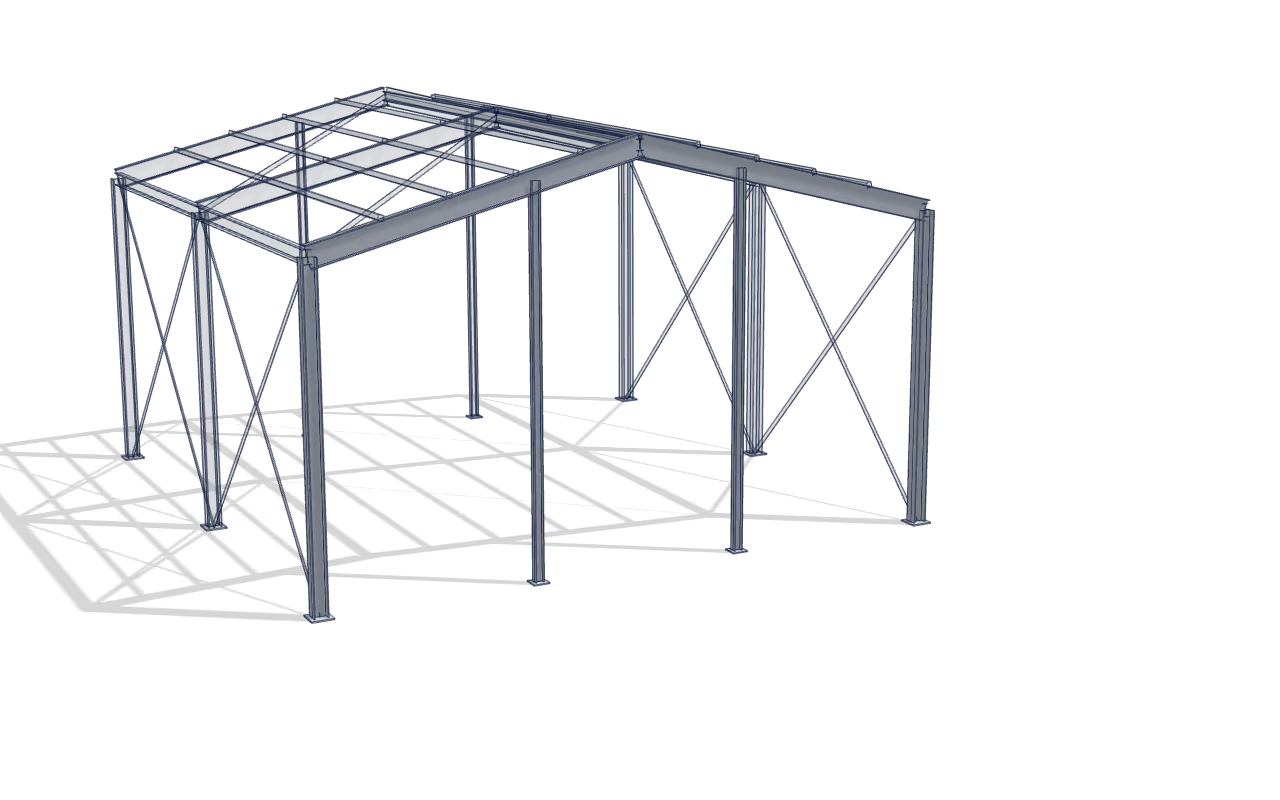
- the project level
- does not descend to a piece mark
- the shop door
- The space between those two
- Seimora is built to occupy it.
- C1
- R1
- GP1
- BP1
- BP2
Continuous line: Seimora’s scope Dashed line: By others
The gap this was built for
A steel package moves through more organisations than almost anything else on a construction programme: an engineer, a detailer, a connection designer, one or more fabricators, a coating house, a haulier, an erector. Each of them keeps excellent records of its own part.
- an engineer
- a detailer
- a connection designer
- one or more fabricators
- a coating house
- a haulier
- an erector
Nobody keeps records of the join.
Nobody keeps records of the join. A fabricator’s system of record ends at the shop door; a contractor’s ends at the project level and does not descend to a piece mark. The space between those two is where steel jobs are lost, and it is a space that a firm which owns a shop cannot occupy without a conflict of interest.
Seimora is built to occupy it. Structural engineering, BIM and digital delivery, and construction coordination and project controls, run as one process, on one model, under one accountable party.
Asset-light, and what that actually buys you
Seimora owns no fabrication shop, coating house or haulier, and no facility is named on this site.
Owning no steel is the point rather than the caveat. A fabricator selling you a managed package has a structural conflict: when its own shop is the constraint, the package is what gives. With no facility to keep loaded, the only thing behind a shop selection is whether that shop suits your job.
What is being sold, then, is orchestration and answerability rather than capacity. That is a real thing to buy, and how we work is where it is set out in enough detail to be held to.
Where the work is
There is no single home market. The United States, the Gulf, Europe and Asia-Pacific are all in scope, which is a consequence of the model rather than an ambition: engineering and detailing are not constrained by geography.
What is constrained by geography is the code and the seal. Which standard governs is set by where the steel is erected, and who may seal a drawing is set by the jurisdiction that reviews it. Both are covered on capabilities and standards, including the parts this site does not claim.
The software, stated as intent rather than as a product
The long-term intent is a coordination layer that makes a multi-shop network behave, from the client’s seat, like a single well-run shop: one timeline, piece by piece, across every facility on a job. It is the natural extension of the accountability position and it is why the join between organisations is worth treating as the product.
None of it is built. There is no client delivery portal, no login and no live project status, and integrations labels every unbuilt connector as exactly that. An unbuilt roadmap is not something a client should have to buy.
| Item | Status |
|---|---|
| The coordination layer | Not built. |
| A client delivery portal | Not built. |
| A login | Not built. |
| Live project status | Not built. |
Bring a real scope
The fastest way to find out whether this model fits your job is to put a real one in front of it.