Status Scope of services. Nothing on this site is a record of completed work.
Contractors & CMs
The objection
“If you don't own a shop, who's accountable when something on the critical path slips?”
Us. The contract is with Seimora, whatever the discipline — detailing, connection design, fabrication coordination, BIM or document control — and any shop or specialist the job needs is Seimora's subcontract, not yours. You do not hold a contract with a shop or a sub-consultant, you do not chase one, and when a date moves you have one party to hold to it rather than a detailer, a fabricator and a document controller each pointing at the next one.
Owning nothing you'd have to protect is the reason this works, not a caveat
Any firm that owns the thing it is deciding how to use has a structural conflict: when that thing is the constraint, it is what gets protected. A fabricator who also sells you a managed package has that conflict on the shop floor — when its own shop is the bottleneck, the package is what gives. A firm reporting your progress has the same conflict if it also holds the construction contract: a return that makes its own commercial position look worse is a return against its own interest. Seimora owns no fabrication shop and holds no construction contract, so placing your job in the shop that actually suits it — capability, capacity against your programme, certification your specification requires, location against your delivery point — or reporting a position against what the parties actually returned, is a decision with nothing behind it except your date.
What is being sold here is orchestration and answerability, not capacity. That is a real thing to buy and it is the whole business.
Where the critical path usually breaks
Not in the shop. It goes wrong at the joins: design issued to a detailer who finds it incomplete, a connection design that comes back after material was ordered, a release made against a drawing with an open review comment, a document issued against a revision nobody confirmed was current, and a delivery built for truck efficiency that arrives in an order the crane cannot use. Those joins are exactly what how we work publishes in detail — the revision control, the review-comment discipline, and the rule that load plans are built backwards from the erection sequence.
Your platform
You are probably running Procore. Outbound delivery of drawings, RFIs and submittals into Procore and Autodesk Construction Cloud is a roadmap item on this site, not a built integration, and integrations labels it as exactly that. Today the exchange is the file formats you already work in. Nothing in the delivery depends on a connector existing.
What this page does not settle
Bonding, insurance limits and liquidated damages are commercial terms, they belong in a contract rather than on a website, and this site publishes no position on them. Put them in your tender documents and they get answered there.
Your files, filed.
On the home page's sample job, these are the documents your side sends, and the files each one replaced.
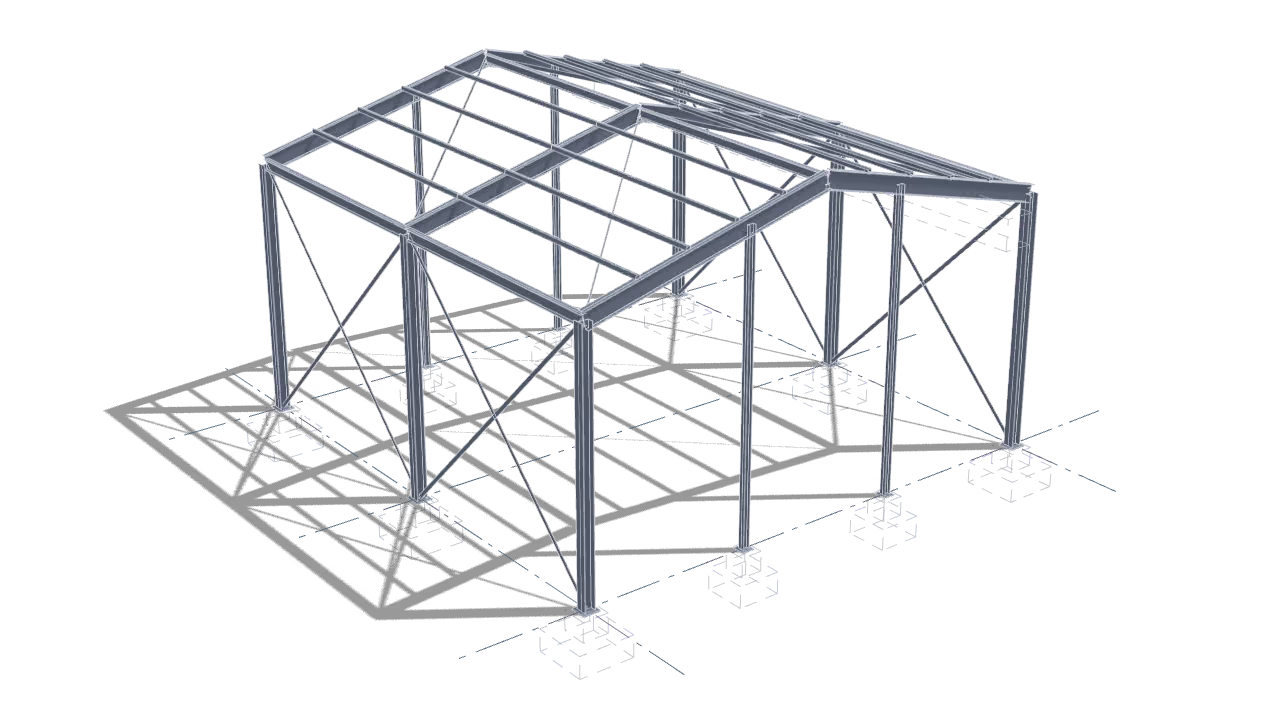
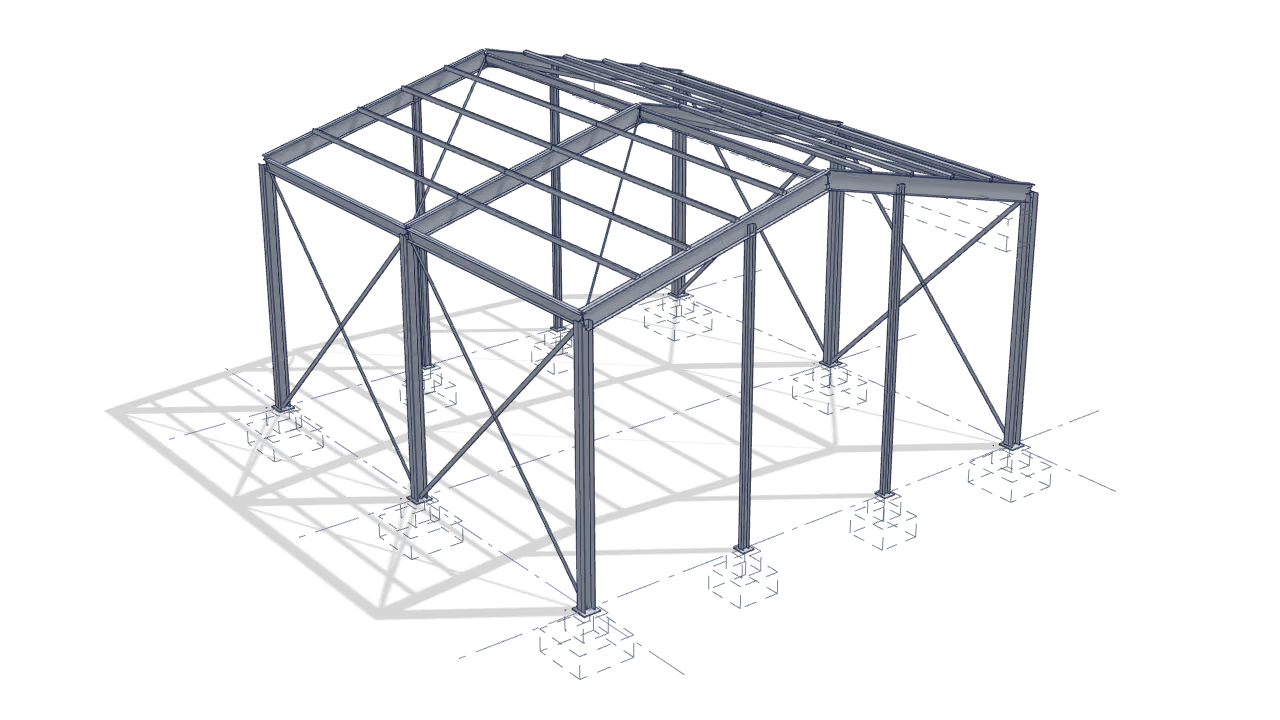
Sample register
DEMO. Not a Seimora project.
Two of the eight sample documents.
- Erection drawingP01DEMO-SEI-ZZ-XX-DR-S-0201
- erection seq v2.pdf
- erection seq v2 markup.pdf
- Anchor bolt planP01DEMO-SEI-ZZ-XX-DR-S-0202
- bolt setting plan.dwg
- bolt setting plan.dwg.bak
- Re: Re: FW: bolts.msg
The part of the work you are actually buying
Not all of them. Most work in this segment sits in these, and the rest is there if the scope grows.
Steel & fabrication engineering
Construction coordination and project controls
Document control
What exists, at which revision, in which status, issued to whom and on what date — and what each issue superseded.Closeout documentation
The as-built model, the drawing set at its final revision and the certificate set, assembled as the job ran rather than chased at the end of it.
Erection sequence for the sample frame by gridline, in steps, not days. Not a Seimora project.
Put a real scope in front of us
A model, a drawing set or a written description of the work. The governing code, the jurisdiction and the date it has to be on site are the three things that change the answer.