Status Scope of services. Nothing on this site is a record of completed work.
What we do
Six practices, one process. Every practice runs through the same five phases, and every capability term here resolves to the page that describes it.
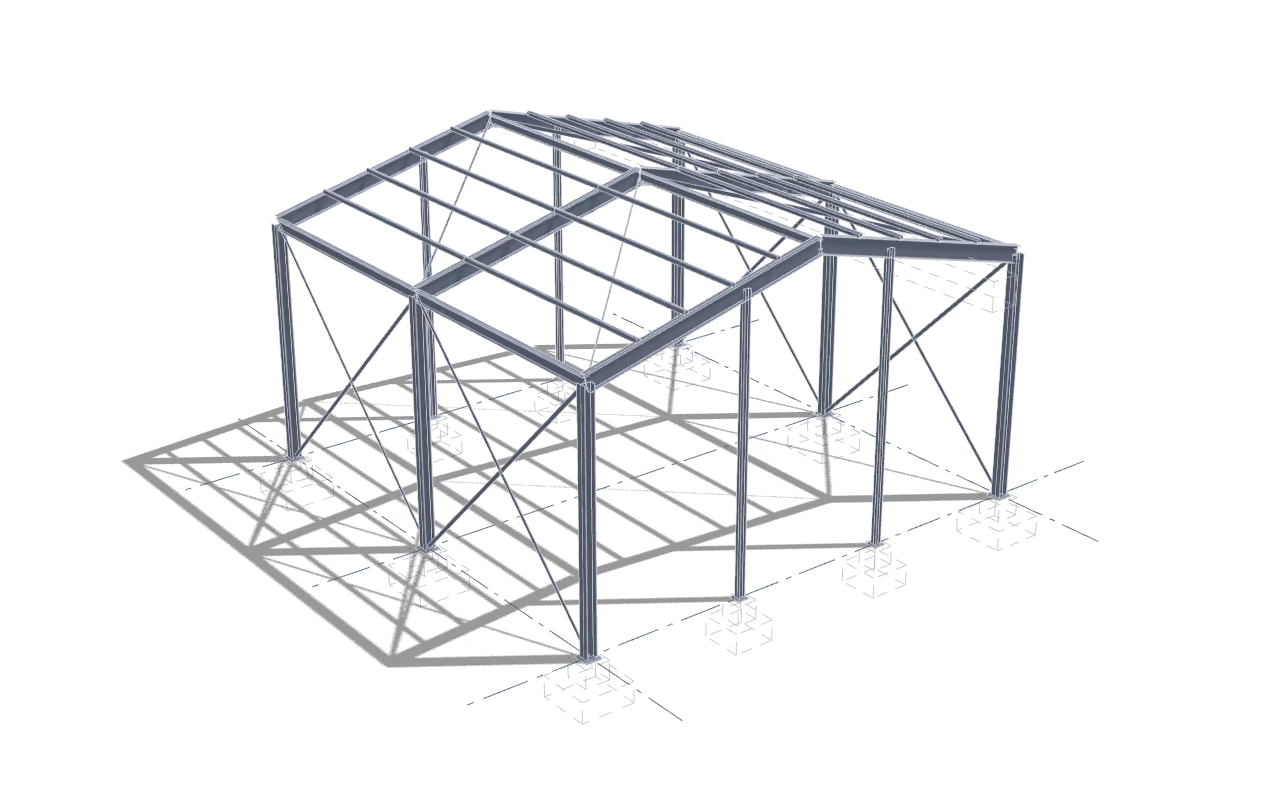
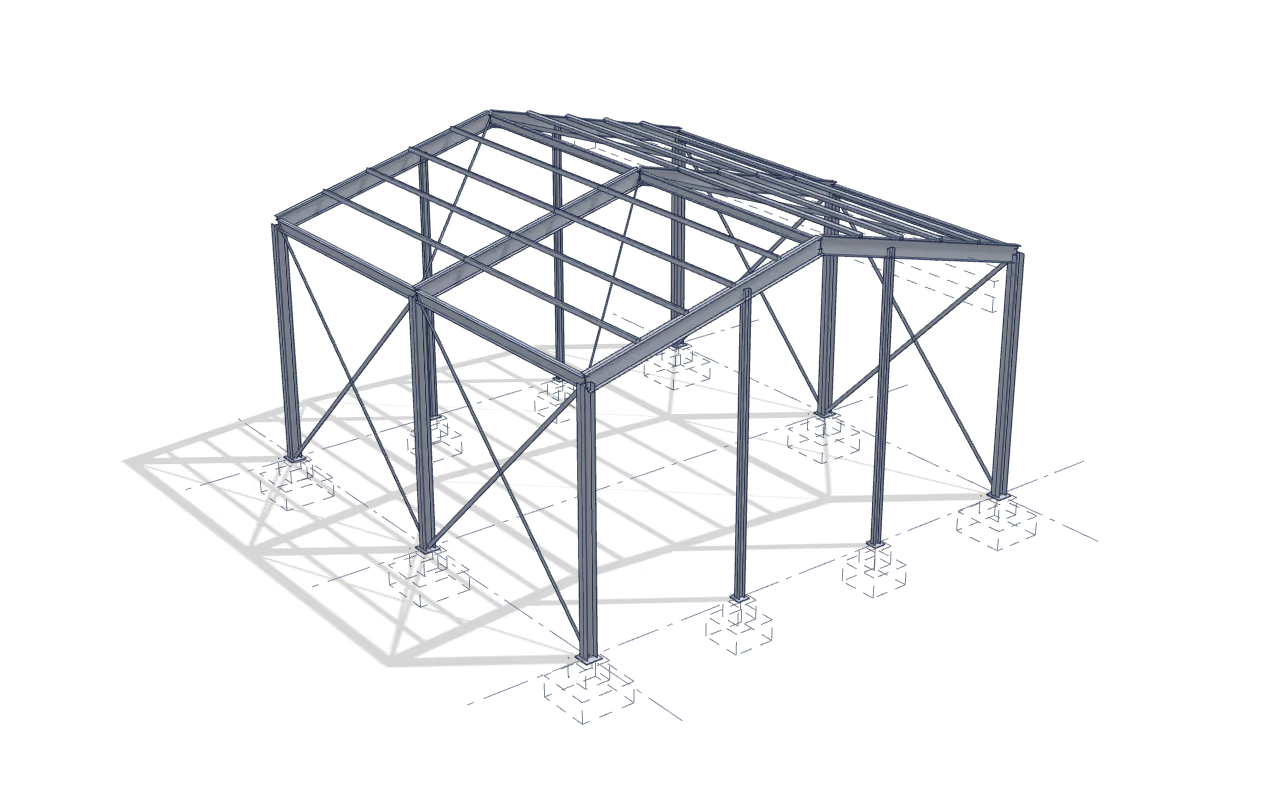
Continuous line: Seimora’s scope Dashed line: By others
- Structural engineeringDEMO-SEI-ZZ-XX-CA-S-0003 Framing scheme, member sizing, design calculations
- Steel & fabrication engineeringDEMO-SEI-ZZ-XX-SH-S-0008 The submittal, and the revision that answers its comments
- BIM & digital deliveryDEMO-SEI-ZZ-XX-RP-Z-0004 A reference-model check report per incoming issue
- Construction coordination and project controlsIts rows in the sample register name no member.
- Industrial & specialty structuresNo row in the sample register.
- Architecture & design supportNo row in the sample register.
One process, six ways into it
Whichever practice an engagement starts in, it runs through the same five phases. Each cell names what that practice produces or works from at that phase, and every one of them is described on the page the lane links to. How we work is the same five phases at depth.
Scroll sideways for phases B to E.
| Practice | A Set up the job | B Qualify the inputs | C Produce and check | D Get it approved | E Issue and support |
|---|---|---|---|---|---|
| Structural engineering | Design basis: code, load cases, materials, criteria | Assumption list against the layouts and loads supplied | Framing scheme, member sizing, design calculations | General arrangements and connection design criteria, for review | The design set at its issued revision, and the analysis model |
| Steel & fabrication engineering | Does not act in this phase. Detailing starts from a design set somebody has already approved, so there is nothing for this practice to set up before one exists. | Detailing basis: the approved set, the forces, the shop's standards | Shop and erection drawings, connection calculations | The submittal, and the revision that answers its comments | Release packages by lot, with the inspection and test plan |
| BIM & digital delivery | Information basis: origin, grid, levels, naming, development | A reference-model check report per incoming issue | Structural and architectural models, the federated set, the clash round | The open issue register, and the model re-issued against it | IFC and the native file at a stated revision; the as-built model |
| Construction coordination and project controls | Coordination basis: who answers what, and under which conventions | The interface list, and the questions open against it | Constructability comments against named details | The submittal loop, and where every package has got to | Change record; closeout assembled from what was issued |
| Industrial & specialty structures | Loading basis: every load case, and the document it was read from | Vendor and process documents, at the revision each was read at | Framing and sizing against the operating case that governs | The reaction schedule the vendor and the foundation designer share | A scheme statement, with the conditions it is valid under |
| Architecture & design support | Design-support basis: who authors, who issues, under whose title block | The set this work joins, at the revision each drawing is at | Sketch schemes, and drawing sets in the host set's conventions | The application pack, and the response list issued with it | Does not act in this phase. A support engagement ends at the issued set. This practice does not act at fabrication release, and nothing on it is released to a shop. |
Where a practice does not act in a phase the cell is empty rather than filled. A grid with something in every cell would be a claim about the grid, not about the work.
- Steel & fabrication engineering, phase A — Detailing starts from a design set somebody has already approved, so there is nothing for this practice to set up before one exists.
- Architecture & design support, phase E — A support engagement ends at the issued set. This practice does not act at fabrication release, and nothing on it is released to a shop.
Each phase groups several of the stages a job moves through: project intake and scope review; kick-off; design and document review; questions and clarifications; engineering, modelling and detailing; internal review; QA/QC; client and design-team coordination; revisions; final deliverables; construction support and closeout.
The six practices
Each one says what it covers, what you receive, what you supply and what it does not do. The pages under a practice are where the detail of one part of it lives.
Structural engineering
Framing schemes, member sizing and design calculations to the governing code, in steel and in the concrete, masonry, light-gauge and timber around it.
Acts in phases A, B, C, D and E.
What you receive: Framing schemes, member sizing, load paths and design calculations, in steel and in the materials a steel frame meets.
Steel & fabrication engineering
Detailing, connection design and the calculations a fabrication package carries, produced so a shop can build from them without interpreting them.
Acts in phases B, C, D and E. Not at A.
What you receive: Shop and erection drawings, connection calculations, joist and deck placement plans, and the fabrication package a shop builds from.
BIM & digital delivery
Structural and architectural models, the check on what arrives, coordination models and IFC exchange — each at a stated level of development and revision.
Acts in phases A, B, C, D and E.
What you receive: Coordinated models, clash review and IFC exchange with the rest of the design team.
Construction coordination and project controls
Coordination that leaves a record: what was issued and to whom, what was asked and answered, what changed, and what the programme is measured against.
Acts in phases A, B, C, D and E.
What you receive: The coordination basis a job's documents are issued under, an interface list and a decision record against it, and the change record that explains a revision.
Industrial & specialty structures
Racks, towers, rooftop and platform steel, solar support, lifting schemes and water structures — sized against loads a building code does not give.
Acts in phases A, B, C, D and E.
What you receive: A loading basis naming the document every load case was read from, framing schemes and member sizing, and the reaction schedule a foundation and an equipment vendor both work from.
Architecture & design support
Concept-stage structural input, drawing production inside another party's set, documentation an application is assembled from, and design-stage coordination.
Acts in phases A, B, C and D. Not at E.
What you receive: Concept schemes with the assumption list each rests on, drawing sets produced to the conventions of the set they join, and the documentation an application is assembled from.
Capability index
This index is the scope Seimora takes engagements in. It is not a record of delivered work — no completed project is claimed or published under the Seimora name. Where a capability requires a licence, certification or registration, that is stated on the page the term links to.
What Seimora is not
The scope above says what Seimora takes engagements in. What it is not — the roles it does not hold and the work it does not claim — is published once, in one place, and this page does not restate it:
Who does what on your projectSend us the scope
A model, a drawing set or a written scope. Tell us which practices you need and which you already have covered — most jobs need one, not all six.