Status Scope of services. Nothing on this site is a record of completed work.
Practice Structural engineering
PE/SE stamping and code compliance
Compliance review against the governing standard, and stamping arranged against the licensure the jurisdiction reviewing the drawings requires.
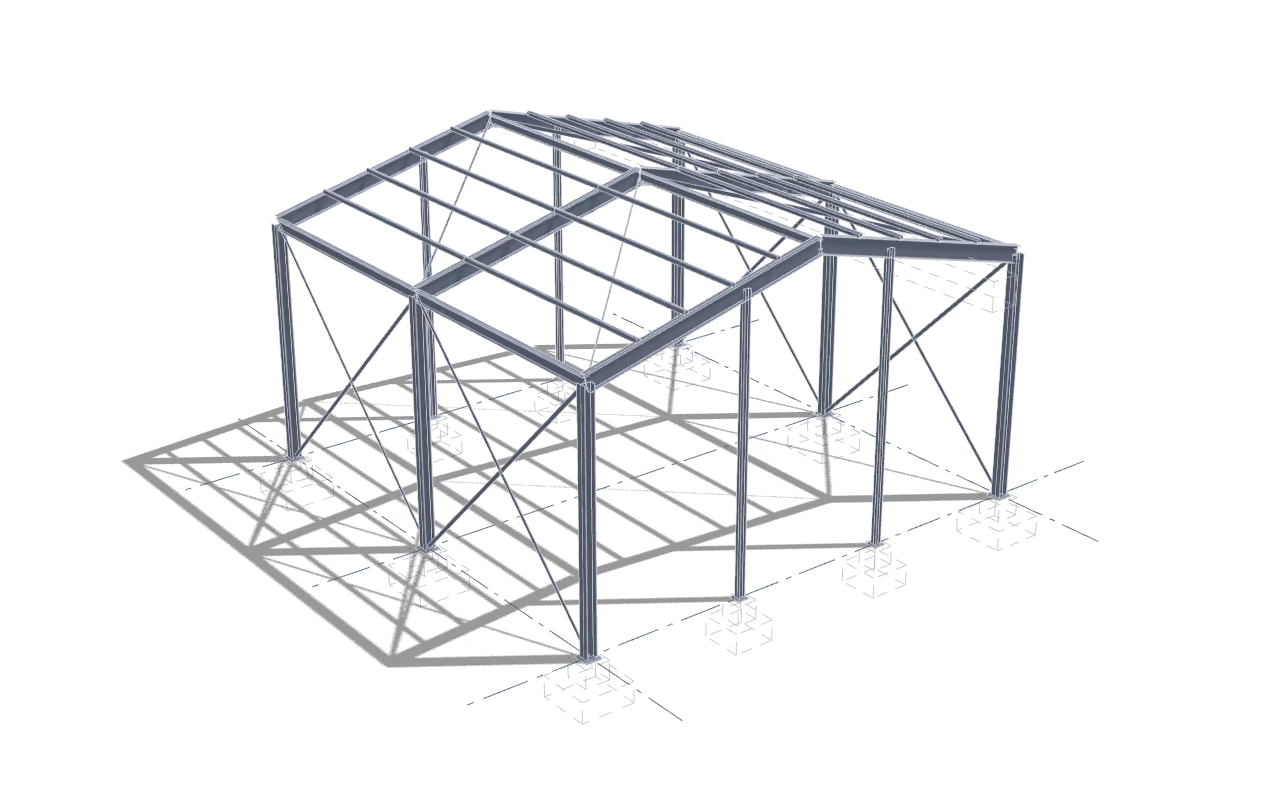
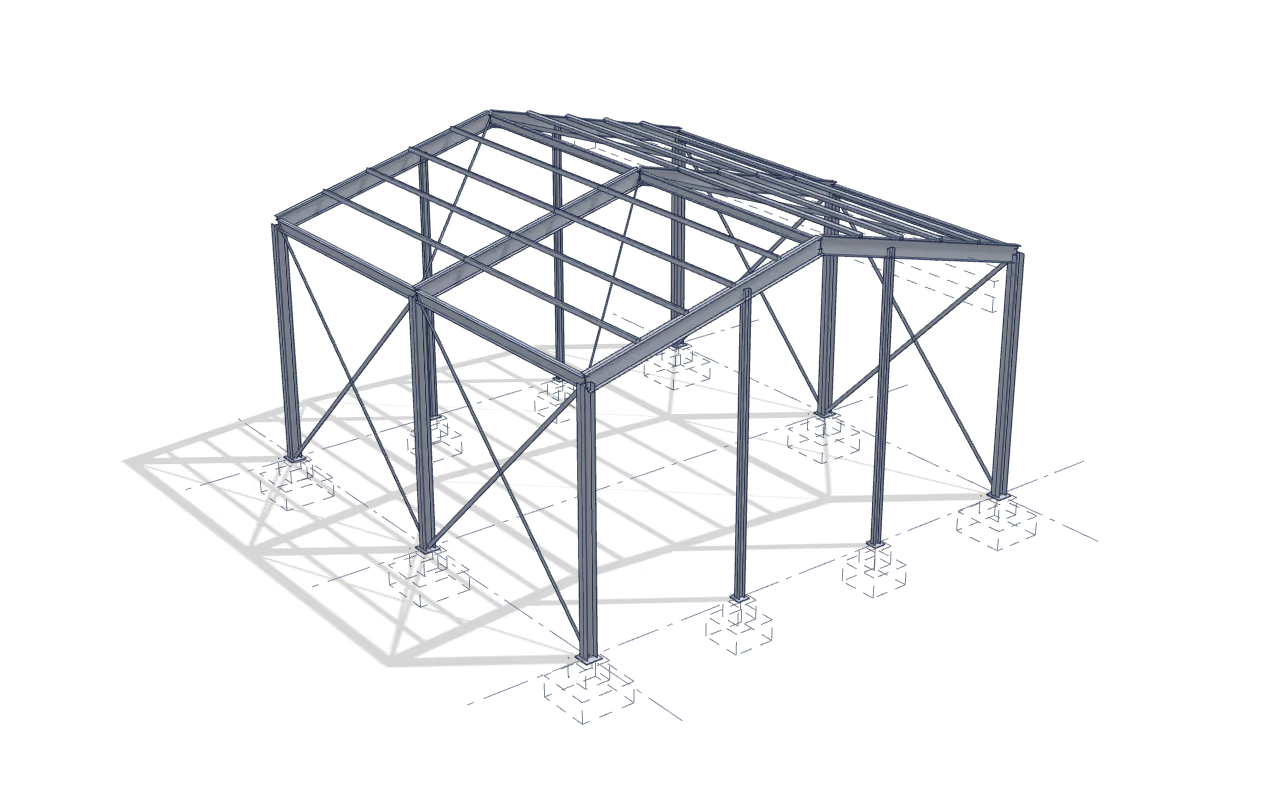
Two different things are often called the same thing here. One is checking that a design satisfies the code it is built to — a technical review, which anyone competent in that code can carry out, from anywhere. The other is a professional engineer or structural engineer taking legal responsibility for that design by sealing it, which is a licensed act: a licence is granted by a jurisdiction to an individual, and it is that individual who seals. This page is about the first of those, and about assembling a package in the form the second one is submitted in.
Who holds the seal
Which engineer may seal a drawing is decided by the jurisdiction that will review it, not by where the work was done. A licence is granted by that jurisdiction to an individual, and this site publishes no licensure map and makes no claim to cover any particular jurisdiction. What a jurisdiction grants, and the separate registration some jurisdictions require of a firm, are set out once under licensure, on the standards page, with the schedule a jurisdiction question is read with.
What a compliance review actually produces
A review that returns "compliant" is not worth having. What is useful is the record underneath it: which clauses were applied and to which members, which load case governed each check, what was verified by calculation and what by inspection of the model, what was excluded as not applicable and why, and what was assumed where the drawings were silent. That record is what a reviewing authority reads, and it is what makes a second round of comments short.
What a submission package is assembled as
A calculation package is put together in the order the reviewing authority reads it rather than the order the checks were run in: the design basis and governing code with any local amendment, the load derivation, the analysis output with the model it came from identified, the member and connection checks with their governing cases, and an index that lets a reviewer find any one of them without reading the rest. Where the authority publishes a checklist or requires a pre-submission meeting, the package is built against that checklist.
Review comments are a tracked list, not an email thread
Comments come back with numbers. A drawing that changes because of a comment carries a revision that says which comment caused it. That is the same discipline the rest of this work runs on — see How we work for revision control and the RFI loop.
Pending confirmation
Each of these is held until a fact is confirmed, and named here rather than written around.
HELD — NOT PUBLISHED
- Which jurisdictions a seal can be arranged in. None is listed anywhere on this site, and none will be until the owner supplies a verified position; the schedule on the standards page is what a jurisdiction question is read with in the meantime.
Deliverables, standards and what you supply
- What you receive
- A code compliance review against the governing standard, clause by clause
- A calculation package assembled in the form the reviewing authority expects, with an index
- A record of what was checked, and of anything found not applicable and why
- Responses to review comments
- What you supply
- The jurisdiction, and the authority that will review the submission
- Any local amendment to the governing code
- The design basis the drawings were produced against
- The drawings and calculations to be reviewed
- The review programme, and any pre-submission meeting the authority requires
- Checked against
- AISC 360
- AISC 303
- AWS D1.1
- Eurocode 3
- IS 800
- BS 5950
- AS 4100
Continuous line: Seimora’s scope Dashed line: By others
Which packages a job’s files can be exchanged with, and in what form, is set out once on the standards page.
What arrives, and what leaves
- Arrives from
- Connection design
Connection calculations and the assumptions behind them are packaged for code compliance review and, where the jurisdiction requires a stamp, for the licensed engineer who will review and seal them.
- Hands on to
- Fabrication coordination
A package whose review comments are closed is what gets released to a shop.
Start with this work
Send the model or the drawing set and say which of it you want. A single page of scope is a normal way to start; the other practices are there if the job needs them later.