Status Scope of services. Nothing on this site is a record of completed work.
Construction coordination and project controls
Coordination that leaves a record: what was issued and to whom, what was asked and answered, what changed, and what the programme is measured against.
- A Set up the jobCoordination basis: who answers what, and under which conventions
- B Qualify the inputsThe interface list, and the questions open against it
- C Produce and checkConstructability comments against named details
- D Get it approvedThe submittal loop, and where every package has got to
- E Issue and supportChange record; closeout assembled from what was issued
What this covers
- The coordination basis
- Project coordination
- Programme and progress
- Drawing and document control
- Questions, and the record they leave
- Submittals and shop drawing coordination
- Constructability review
- Coordination during construction
- Change, and what it is recorded against
- Quality coordination
- As-built documentation and closeout
The construction-management function on your project is two jobs wearing one name. One of them is commercial: holding the trade contracts, instructing the work and carrying the programme risk. The other is informational: knowing what was issued and to whom, what was asked and what came back, what changed and which revision carried it, and what the record says when the job is over and somebody wants something proved. This practice is the second job. It is bought by whoever holds the first.
The bands below are what an engagement here can cover. Each says whose information the work runs on and what leaves it.
The coordination basis
Coordination that was never defined is a series of emails with a hopeful tone. What makes it a function is a short document written before it starts, settling five things nobody can infer afterwards. Who is party to what, and which of them answers which class of question. How a document is numbered and revised, and what each status on a title block permits — two parties using the same letters for different states is the ordinary reason a shop builds a superseded drawing. Which programme the reporting is measured against, whose it is, and the revision it was fixed at. What counts as a change, and what record one has to leave. And where the project's information lives, because that is some party's system rather than this one's.
Project coordination
Coordinating parties who hold no contract with each other is mostly a matter of getting a question to the one party who can answer it, with enough of the file attached that they can. The work is unglamorous and it is where jobs are lost: an architect's revision that three of five recipients received, a vendor's drawing in a format the consultant could not open, an interface — a slab edge, a plant base, a cladding rail — that two parties each assumed the other had set out. What this produces is not a meeting. It is the record of what was asked, of whom and on what date; the list of interfaces with a party's name against each; and the list of what nobody has answered yet, which is the only part anybody reads twice.
Programme and progress
A programme is a claim about the future that some party is accountable for. Progress against it is a claim about the present that several parties report separately, and they disagree far more often than anyone is lying: a fabricator counting tonnes released, an erector counting bays stood, a designer counting drawings issued, all against one bar on one chart. What a controls function does about that is fix what each party reports, in what unit, against which activity and how often, then set the reported position beside the programme it is measured against, naming the date each figure was given. Project controls is the page for it. Whose programme it is, and whether one is produced under this practice or reported against one the contractor holds, is a question this page states below rather than answers.
Drawing and document control
Every document on a job has a number, a revision, a status and a distribution, and a project loses control of its information the first time one of those four is wrong about a document that has already gone out. What records all four is a register: what exists, at which revision, in which status, issued to whom and on what date, and what each issue superseded. It is the cheapest thing on a job to keep and the one nobody wants to own, because keeping it is clerical until the day it is the only evidence of what a party held when they built. Document control is the page for how one is kept, what a transmittal carries, and why a superseded revision is marked rather than deleted.
Questions, and the record they leave
A question asked on the telephone is an answer nobody can find in eighteen months. What makes a question an asset is the record it leaves: the number it carries, the drawing and revision it was raised against, the party it was put to, the answer, the date, and the revision that carried that answer back into the documents. The last of those is where most registers fail — an answered question whose answer never reached a drawing is a question the site gets wrong anyway, at full cost, having been answered correctly. A question from a site is the same object. Nobody from here is on a site, so a query about what is actually there is answered against the issued documents, and anything that has to be seen or measured is done by the party standing in front of it.
Submittals and shop drawing coordination
A submittal is a document sent for another party's review, and what goes wrong is almost never the document. It is the loop: what was sent, on what date, to which reviewer, what status came back, and whether the resubmission is the same document at a new revision or a different document wearing the old number. A shop drawing is the submittal with the shortest fuse, because a shop holds its programme open while the loop runs, and a package sitting in a reviewer's queue costs exactly what one that was never sent costs. Nothing is reviewed or returned here on a reviewer's behalf — that belongs to the consultant or the engineer the contract names for it. What coordination adds is that the state of every package is visible to everyone waiting on one.
Constructability review
A constructability review is a design read by somebody asking how it gets built rather than whether it stands up, and the questions are worth more the earlier they are asked. Can this connection be made with a crane still holding the piece, or does it need a seat. Is there room for a wrench on the bolt group as drawn. Does this splice land where a crew can reach it from the floor below. Will the piece fit on a truck and through the site gate. Can the deck be laid before the bracing goes in. What leaves a review is a list of comments against named details, each with what it costs to leave alone. It changes no design and moves no responsibility: what to do with each comment is decided by the engineer of record, and the answer is often nothing.
Coordination during construction
Once construction starts, the coordination model stops being a design tool and becomes what arguments are settled against. The questions change: not does this clash, but which revision was this built to, what moved since the last federation, and is the model still the same building as the drawings. The work is keeping the model, the drawing set and the register in step — a model at an issued revision, a drawing list saying what exists at which revision, and every change recorded in one place rather than three. The model itself is built, federated and clash-reviewed under BIM and digital delivery. Where a steel package is in scope, what a shop is released against and what comes back from it is fabrication coordination, a scope of its own.
Change, and what it is recorded against
Nothing on a construction job is as expensive as a change nobody wrote down. A change record is the dull answer: what changed, when, what caused it — an instruction, a site condition, a clash, a supplier substitution, a revised architectural drawing — which documents it touched and which revision carried it. The value is in the last columns rather than the first, because the change everybody remembers is not the one that costs money eighteen months later. Recording a change is not valuing one and it is not agreeing one. What it is worth is that when a claim is made by a party that was there, the documents either support it or they do not, by date, rather than by whose recollection is the more confident.
Quality coordination
Quality coordination here is documentary. Whether an inspection and test plan exists before work starts and went out with the release. Whether the records that plan calls for — material certificates, weld and NDT records, coating readings — are coming back attributed to the pieces they cover rather than filed by date. Whether a hold point was actually held. Whether anything is closing out with a record missing. None of that is inspection: no weld, coating or fabricated assembly is examined from here and no test is witnessed, because inspection is carried out by the inspector engaged for the job, and the plan itself is issued with the release under fabrication coordination. What coordination adds is the reconciliation — the records the plan requires, against those that have arrived.
As-built documentation and closeout
The closeout set is the only part of a job read years later, by people who were not there, usually because something is being altered or something has to be proved. It is assembled rather than reconstructed, and which of the two it will be is decided at the start: a job whose documents were recorded as they were issued has a closeout set already, and a job whose documents were filed by date has a project to do at the end, staffed by whoever is still there. A punch list is the same discipline pointed at the building instead of the file — an item, where it is, which party owns it, what closes it, and the record that it did. Closeout documentation is the page for what the set contains and what each part is assembled from.
Pending confirmation
Each of these is held until a fact is confirmed, and named here rather than written around.
HELD — NOT PUBLISHED
- What a programme role here is. Producing a construction programme and reporting a position against one somebody else holds and maintains are different engagements carrying different responsibilities. The bands above describe the work under either, because most of it is the same; nothing here states that a programme is produced under this practice until the owner confirms it.
- What a procurement role here is. Procurement coordination can mean writing the technical requirement a package is bought against and comparing what is offered against it, or it can mean running an enquiry and awarding against it. Only the first of those is a coordination role, and which is offered is not stated on this site until the owner confirms it.
- The documents this practice's deliverable list will name. A document register of what was issued, at which revision and to whom, built from the transmittal record; an RFI log; a submittal log; a constructability review; a progress report compiled from the parties' own returns; and an as-built document set assembled from issued records — six artefacts the work above produces. None is published as something you receive until the two questions above are answered, because both of them change what is in these documents and whose data each is built from.
Deliverables, standards and what you supply
- What you receive
- A coordination basis: who answers what, the numbering, revision and status conventions documents are issued under, and whose programme the reporting is measured against
- An interface list: the points where two parties' scopes meet, which party was given each one, and the document that settles it
- A decision record: what was decided, by which party, and the document revision it was decided against
- A change record: what changed, what caused it, the documents it touched, and the revision that carried it
- What you supply
- The parties on the job, and which of them answers which class of question
- The numbering, revision and status conventions the project already runs, where it has any
- The programme the reporting is measured against, whose it is, and the revision it was fixed at
- Where the project's information is kept, and what access this work is given to it
- Who holds the construction contract, who instructs the trades, and who reviews and returns a submittal
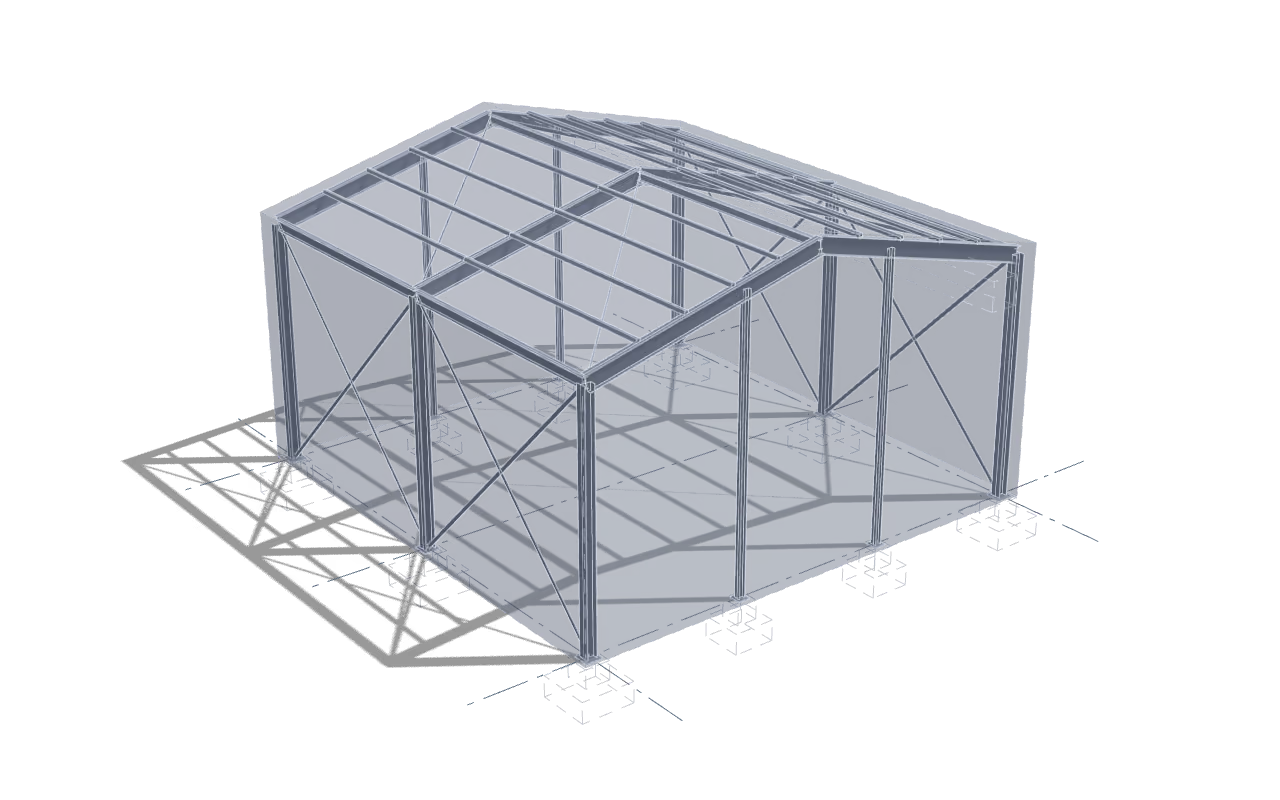
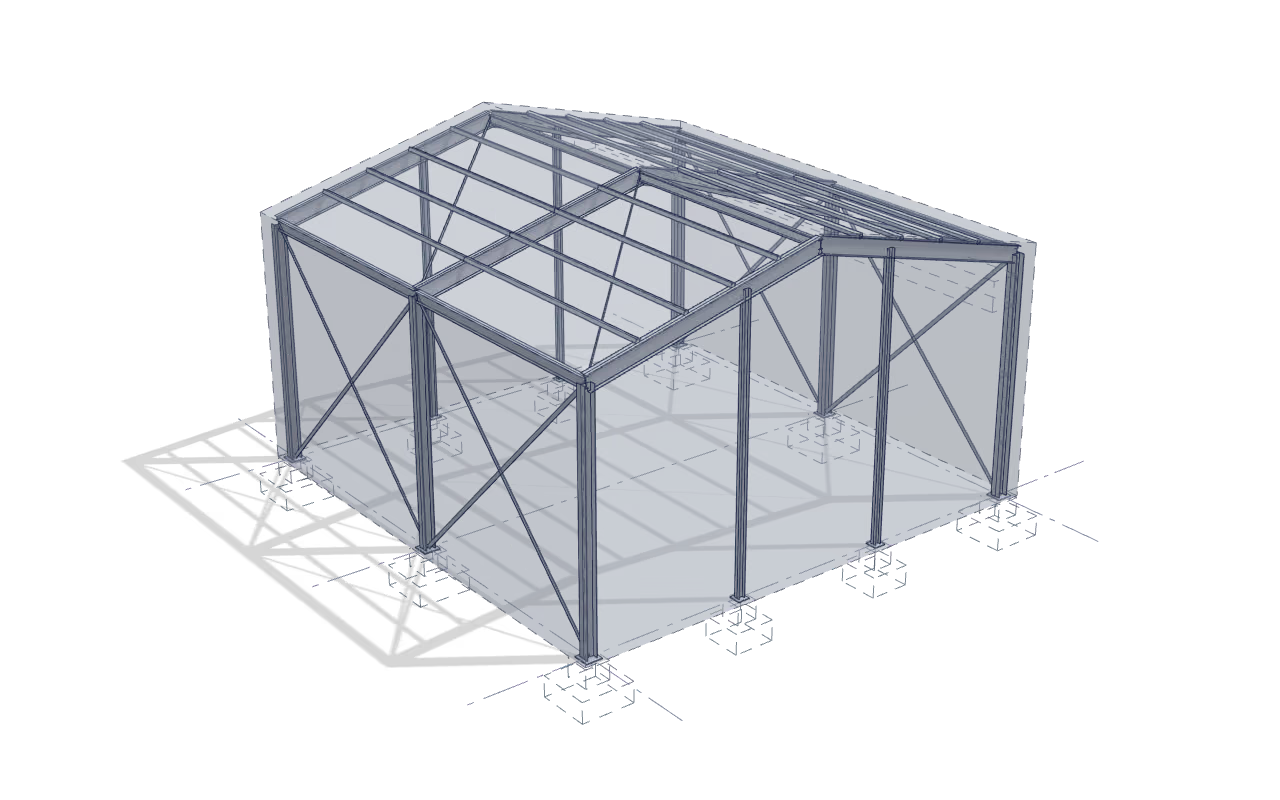
Continuous line: Seimora’s scope Dashed line: By others
Which packages a job’s files can be exchanged with, and in what form, is set out once on the standards page.
What arrives
- Arrives from
- Steel & fabrication engineering
The release schedule, the lot breakdown and the production status record go to construction coordination, so the programme is reported against what was released for fabrication rather than against what was drawn.
- Arrives from
- BIM & digital delivery
The coordination model at its issued revision, the open issue register and the drawing list go to construction coordination, so what is reported from a site is measured against the model the drawings came out of rather than against a set printed from an older one.
Pages under this practice
- Project controls
The programme a position is reported against, whose it is and at which revision, what each party returns and in what unit, and what the record says later.
- Document control
What exists, at which revision, in which status, issued to whom and on what date — and what each issue superseded.
- Closeout documentation
The as-built model, the drawing set at its final revision and the certificate set, assembled as the job ran rather than chased at the end of it.
What this practice does not do
Seimora does not act as general contractor, construction manager at risk, or any licensed construction role. It coordinates and reports; it does not hold the construction contract.
Start with this work
Send the model or the drawing set and say which of it you want. A single page of scope is a normal way to start; the other practices are there if the job needs them later.