Status Scope of services. Nothing on this site is a record of completed work.
Practice Construction coordination and project controls
Project controls
The programme a position is reported against, whose it is and at which revision, what each party returns and in what unit, and what the record says later.
Two parties can look at the same job and give different completion figures, both honestly. One is counting drawings issued against drawings scheduled; the other is counting tonnes erected against tonnes on the programme. Neither is wrong and neither is comparable. Controls is the discipline of deciding in advance which of those numbers a job will be run on, and then keeping the answer stable long enough for it to mean something.
Whose programme it is
A programme belongs to whoever is accountable for the dates in it, and on most construction jobs that is the party holding the trade contracts. A coordination role can be either of two things against that. One of them builds and maintains the programme for a client who has none, which makes the programme an output and puts its logic, its durations and its float under the same scrutiny as a calculation. The other reports a position against the programme the contractor already holds, which makes the programme an input and confines the work to measuring against somebody else's baseline. Those are different engagements carrying different responsibilities, and which of the two is on offer is not settled on this site. The bands below hold under either, because the mechanics of reporting do not change with the answer — only the ownership does.
What a baseline has to say to be measurable
A programme that cannot be reported against is a picture. What makes one measurable is dull work done early: an activity list at a level somebody can actually report at — not "fabrication" spanning eleven months — with a start, a finish, a predecessor and an owning party on each; a baseline frozen on a stated date and carrying a revision number; and a rule for what happens to it when a change lands, so the version a report is made against is never in question. The common failure here is not a bad plan. It is a plan re-baselined quietly, so that a job four weeks late reports on programme against a programme that moved four weeks with it, and the slippage becomes invisible in exactly the document that exists to show it.
Where the numbers come from
Nobody from here is on a site, and no system inside a fabricator, an erector or a main contractor is readable from here, so every figure in a report arrives from the party doing the work. That is a constraint to design around rather than apologise for, and what it means in practice is fixing the return: what each party reports, in what unit, against which activity, at what interval, and what evidence sits behind the figure — a lot released, a piece mark despatched, a drawing transmitted, a bay signed off. A return in a fixed format can be set beside the one before it. A paragraph about how things are going cannot, and a paragraph is what arrives when nobody said what the unit was.
Reporting a difference rather than a percentage
A single completion percentage is the least useful number a project produces, because there is no way for it to be wrong. What a reader can act on is the difference and its shape: which activities are behind the baseline and by how much, which of those sit on the longest path and which have float to absorb it, what each is waiting on and which party owns that, and what has moved since the last report. Reporting the difference also disposes of the argument about the total. Two parties who cannot agree whether a job is sixty or seventy per cent complete can usually agree precisely which four activities are late, which is the conversation that changes something.
What controls does not decide
Measuring a programme is not directing the work it describes. A report says what has happened against what was planned. It does not instruct a trade, re-sequence a site, accelerate a package, or accept or reject a claim for time or money — those belong to whoever holds the construction contract. What this work owes instead is traceability: every position it reports can be taken back to the return it came from, the party that made it, the date it was given and the revision of the programme it was measured against. A number with none of those behind it is an opinion in a box, and it is indistinguishable from one that was checked.
Pending confirmation
Each of these is held until a fact is confirmed, and named here rather than written around.
HELD — NOT PUBLISHED
- The progress report this page describes is not published as something you receive. What is in one, and whose returns it is compiled from, both change with whether a programme is produced under this practice or a position is reported against one the contractor holds — and that is not settled. The bands below say what a return has to carry either way.
Deliverables, standards and what you supply
- What you receive
- A programme basis: which programme the reporting is measured against, whose it is, at which revision, and the date it was fixed at
- A status return format: what each party returns, in what unit, against which activity, at what interval, and what evidence sits behind the figure
- A constraint list: what each activity is waiting on, and which party owns the thing it is waiting for
- A record of what each party returned and when, so a position stated six months ago can be reconstructed rather than remembered
- What you supply
- The programme the reporting is measured against, and the party that maintains it
- The activity level the job is to be reported at, and the unit each activity is measured in, where the contract or the programme already sets either
- The parties who will make a return, and a named contact in each
- The reporting interval, and the cut-off date each report is made to
- Who decides a change to the programme, and who accepts or rejects a claim for time
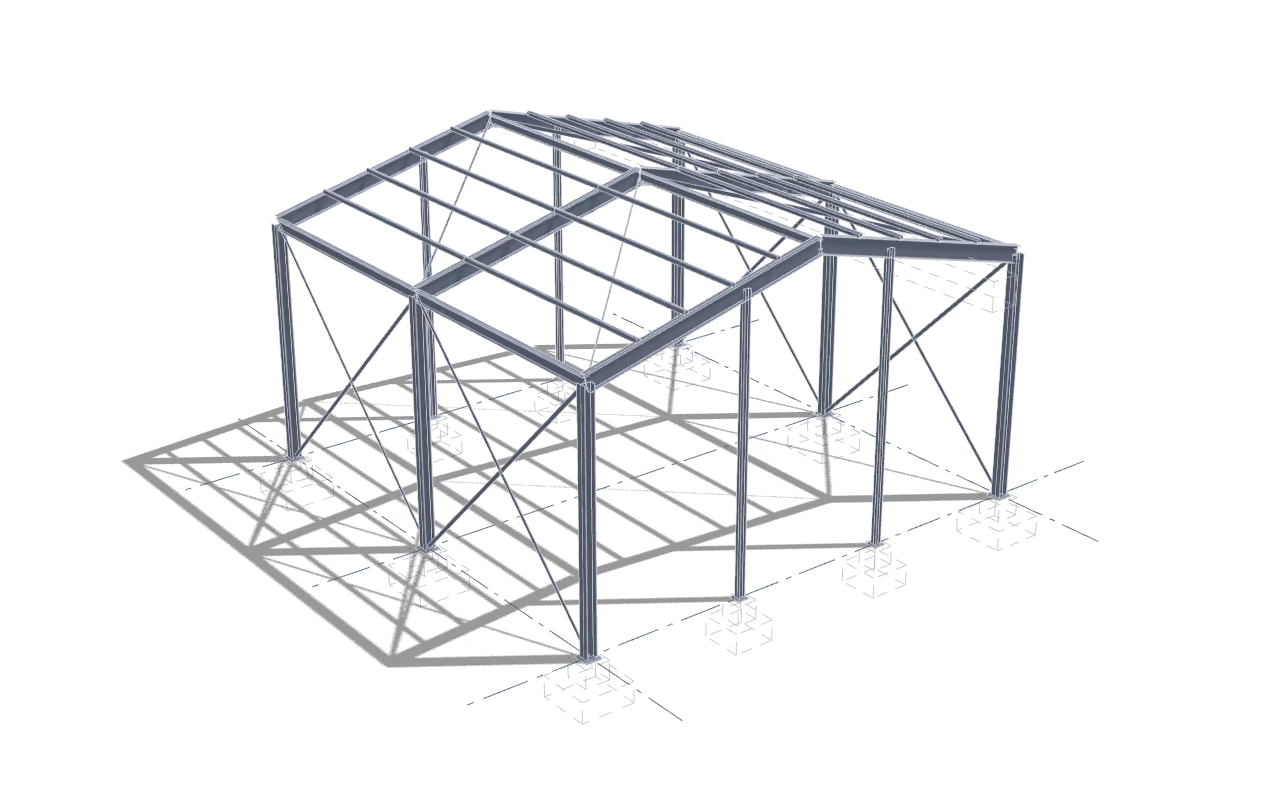
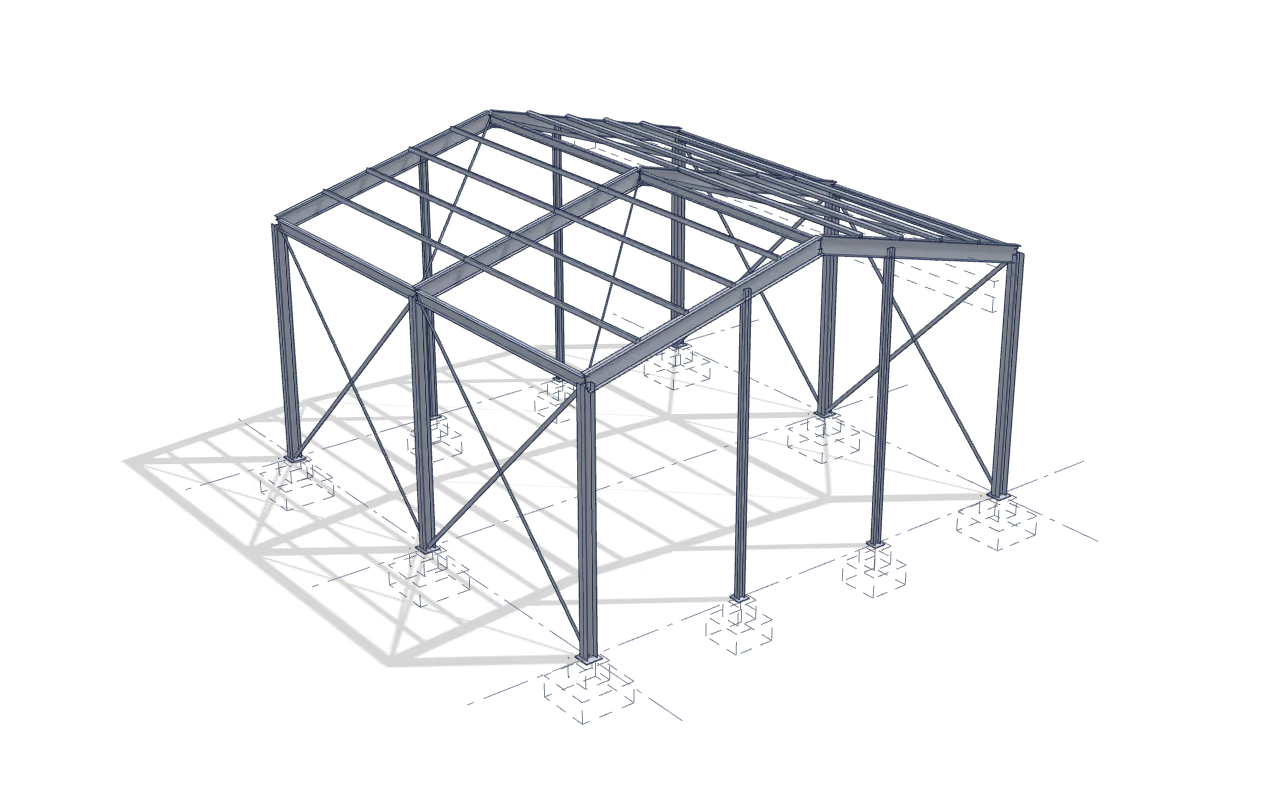
Continuous line: Seimora’s scope Dashed line: By others
Which packages a job’s files can be exchanged with, and in what form, is set out once on the standards page.
What arrives
- Arrives from
- Document control
The transmittal record and the revision status of every issued document go to project controls, so a document milestone is reported against what was actually issued and received rather than against what was expected to be.
Start with this work
Send the model or the drawing set and say which of it you want. A single page of scope is a normal way to start; the other practices are there if the job needs them later.