Status Scope of services. Nothing on this site is a record of completed work.
For EPC and industrial owners
The objection
“Can you hold a documentation standard our auditors will accept?”
The honest answer has two halves, and the first one is a limitation.
What we cannot point you at
An audit we have passed. Seimora publishes no completed projects, because there are none to publish under its name, and a claim that our documentation has satisfied somebody's auditor would be a claim about work that does not exist. It is the one thing a firm in this position cannot borrow.
What we can do, which is the part that actually decides this
Agree the document register before fabrication starts. Most documentation failures in this sector are not failures of rigour at the end; they are the discovery, at the end, that a record which had to be made at the time was never made — a material certificate nobody linked to a heat number, a weld record for a procedure that was superseded, a coating reading taken but not attributed to a piece.
So the register is settled up front: which records exist, who produces each one, which piece each one attaches to, and which points in the work stop until someone has looked. Those are the hold and witness points in the inspection and test plan, and they are agreed with you rather than declared to you — a hold point you were not told about is a hold point you cannot attend.
The record set itself is the ordinary one: mill test reports, weld inspection records, NDT results to the extent your specification calls for, surface preparation and coating records, nonconformances with their disposition, and packing lists keyed to piece marks. It is collected as the work runs and indexed at the end, which is the only reason closeout documentation can hand over a package rather than start a search.
Your specification outranks the code
On plant work the governing document is usually a client specification that overrides the base standard in a dozen specific places. The first work on the job is listing every one of those departures, because that list is what the design, the detailing and the inspection plan are all built against. Where a clause is ambiguous it is raised before it is interpreted.
Certification sits with a fabricating shop
EN 1090, ISO 3834 and AISC certification are held by a fabricating shop against its own systems. Seimora owns no shop and holds none of them. No shop is named on this site — see standards.
Your files, filed.
On the home page's sample job, these are the documents your side sends, and the files each one replaced.
Sample register
DEMO. Not a Seimora project.
Two of the eight sample documents.
- Vendor documents registerP01DEMO-SEI-ZZ-XX-SH-Z-0003
- datasheet rev B.pdf
- datasheet rev B (signed).pdf
- vendor docs.zip
- Design basisP01DEMO-SEI-ZZ-XX-RP-S-0001
- loads from vendor.pdf
- loads v2 USE THIS.xlsx
The part of the work you are actually buying
Not all of them. Most work in this segment sits in these, and the rest is there if the scope grows.
Structural engineering
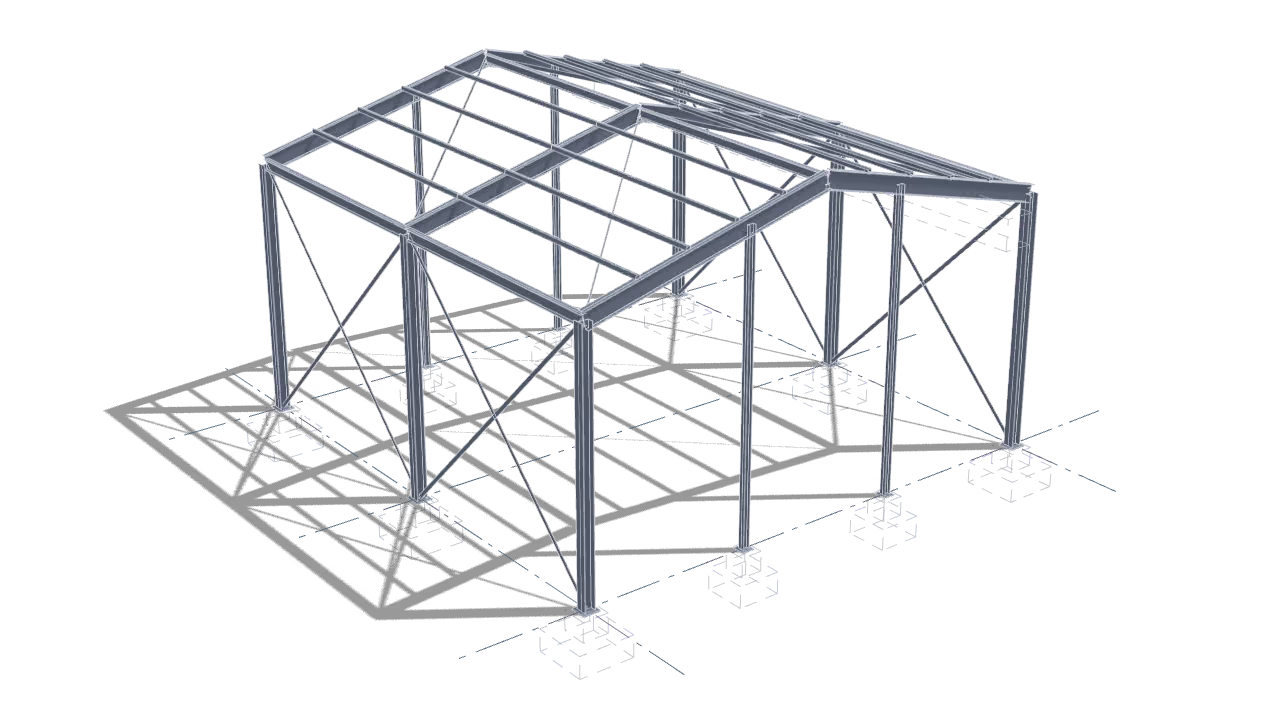
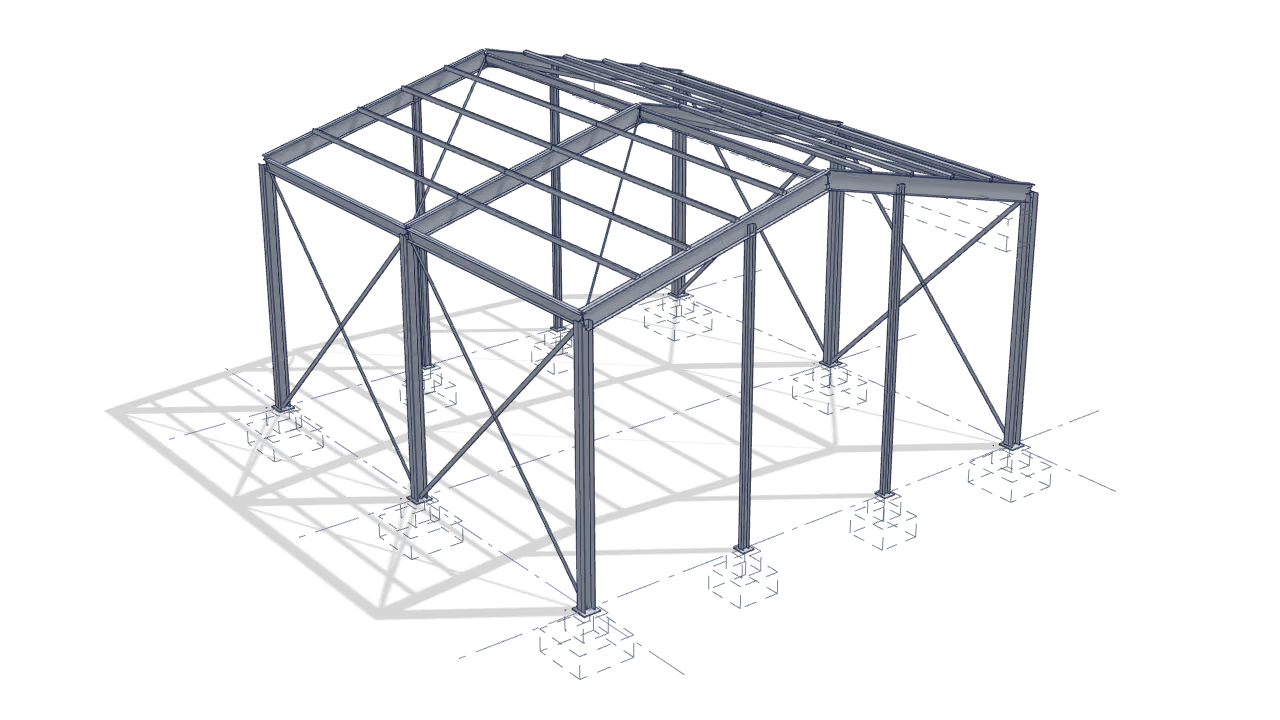
Sample frame, notional load case. Shape only, not a design check. Not a Seimora project. Steel & fabrication engineering
Steel detailing
Shop drawings, erection drawings, CNC files, bolt lists and advance bills of material, produced from a model the shop can build from without interpreting it.Fabrication coordination
Release packages by lot or erection sequence, the inspection and test plan issued with them, and a production status record reconciled against the release.
Construction coordination and project controls
Put a real scope in front of us
A model, a drawing set or a written description of the work. The governing code, the jurisdiction and the date it has to be on site are the three things that change the answer.