Status Scope of services. Nothing on this site is a record of completed work.
For fabricators
The objection
“Offshore detailers cost me more in rework than they save.”
It is a fair objection and it is usually true. It is worth being precise about why, because the reason is not that the detailers were bad.
Rework is produced by unanswered questions, not by bad drafting
Almost every expensive detailing error starts as a decision the detailer had to make because nobody else would: a bolt grade nobody confirmed, a camber nobody specified, an edge distance at a skewed connection that the design drawings did not resolve. Someone a long way from the job takes that decision quietly, consistently, forty times, and it arrives in your shop as material that has already been cut.
The second source is the model nobody checked on arrival — wrong origin, wrong revision, properties missing that the next stage needed. That one is discovered late by definition, because everything built on top of it looks correct.
What we do differently about both
Questions are raised against the drawing rather than resolved silently, and the answer goes into the model so the same question cannot be answered two ways on two sheets. An incoming-model check covers origin, units, grid and level agreement, and whether the contents match the issue sheet; it is written down and sent back. Connection design and detailing run in the same model rather than across two parties, so a connection change is a model change rather than a markup.
That is the whole of it. It is process, not a trick, and it is published in full at how we work so you can hold us to it.
What we cannot show you
No rework rate. Seimora is a new brand with no completed projects published under its name, and a rework figure from a firm with no published portfolio is a number you would be right to ignore. We are not going to invent one.
What we can do instead is make the first scope small enough to check: one sequence, one lot, one connection type — priced and delivered before you commit the rest of the job to it. Your own checking is better evidence than our claim.
What we work in
Tekla Structures, SDS2 and Advance Steel, against AISC 360, AISC 303, AWS D1.1, EN 1090-2, Eurocode 3 and IS 800 depending on where the steel is erected. The full list is on standards. If your shop standard is a template, a marking convention and a set of drawing preferences, send them — working to yours is cheaper for both of us than teaching you ours.
Your files, filed.
On the home page's sample job, these are the documents your side sends, and the files each one replaced.
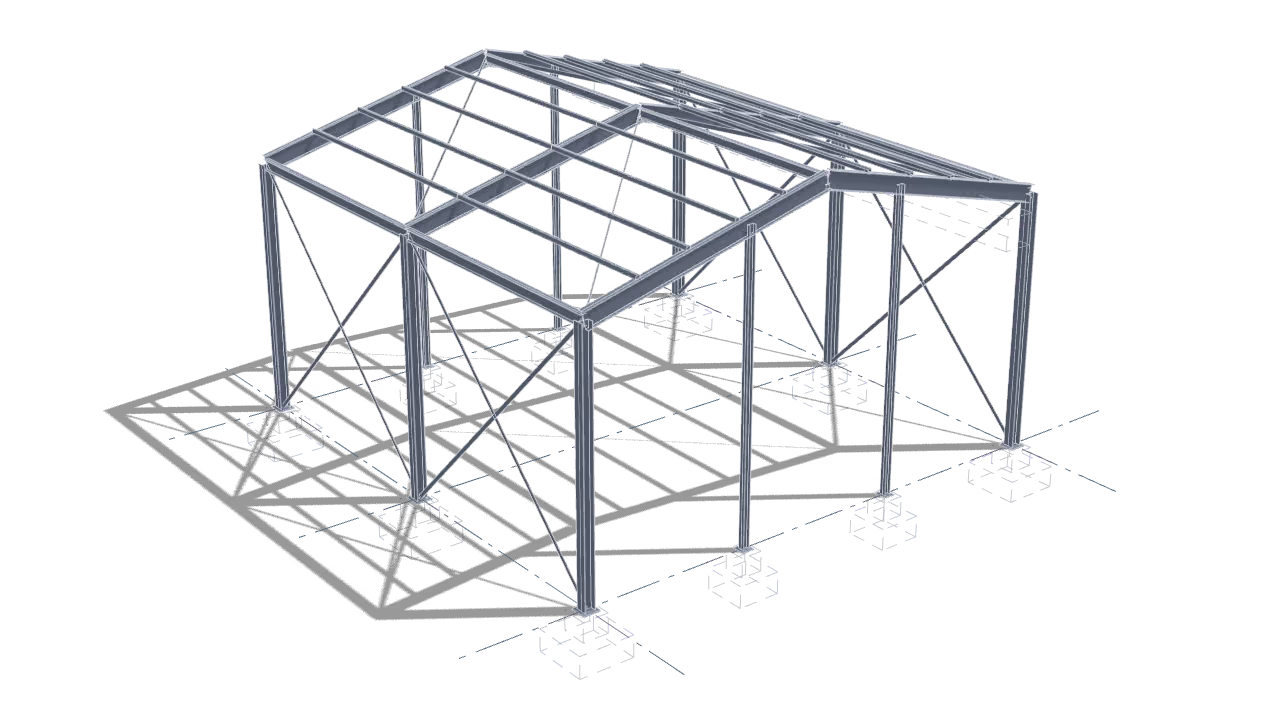
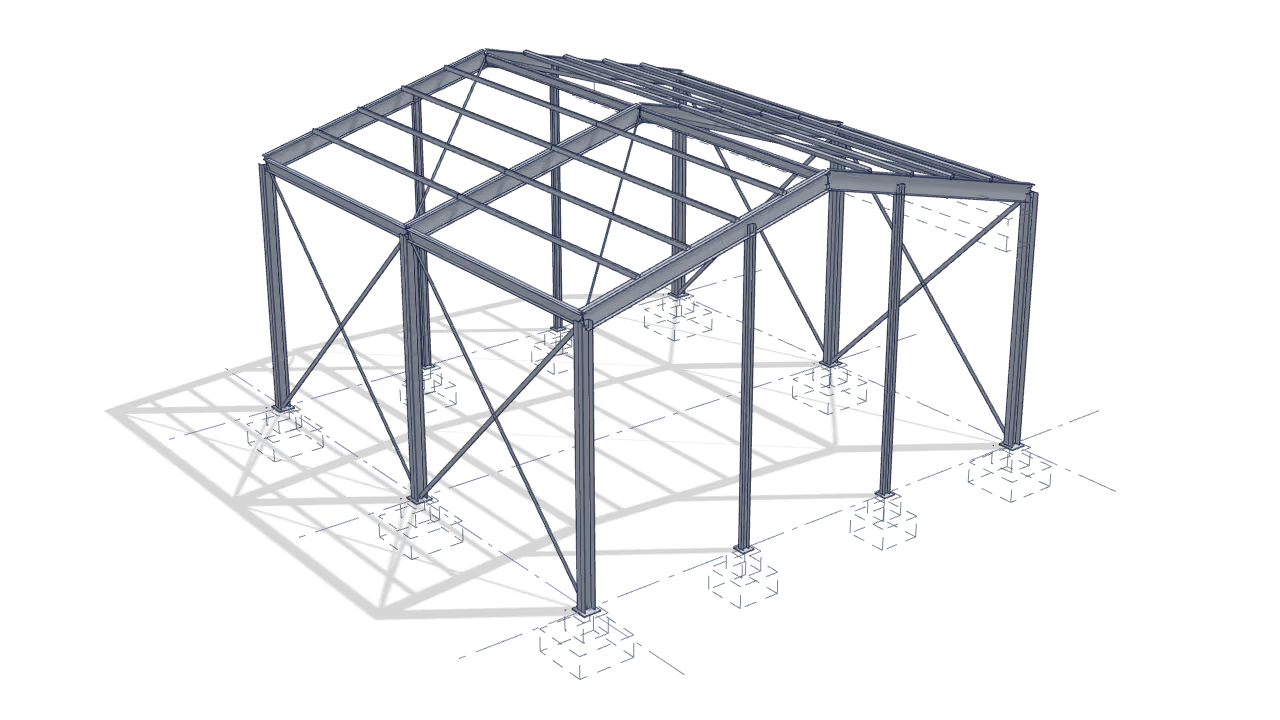
Sample register
DEMO. Not a Seimora project.
Two of the eight sample documents.
- Shop drawing, C1P01DEMO-SEI-ZZ-XX-DR-S-0101
- shop dwg C1 rev2.pdf
- shop dwg C1 rev3.pdf
- shop dwg C1 rev3 FINAL.pdf
- shop dwg C1 rev3 FINAL (1).pdf
- Plate schedule, BP1 and BP2P01DEMO-SEI-ZZ-XX-SH-S-0102
- plate cut list.xlsx
- plate cut list new.xlsx
The part of the work you are actually buying
Not all of them. Most work in this segment sits in these, and the rest is there if the scope grows.
Structural engineering
Steel & fabrication engineering
Steel detailing
Shop drawings, erection drawings, CNC files, bolt lists and advance bills of material, produced from a model the shop can build from without interpreting it.Connection design
Connection calculations, sketches and schedules, checked against the governing code and against what the shop selected for the job can actually fabricate.
Base plates of the sample frame, nested by thickness, with a generated NC header. Sample. Not a Seimora project. BIM & digital delivery
Put a real scope in front of us
A model, a drawing set or a written description of the work. The governing code, the jurisdiction and the date it has to be on site are the three things that change the answer.