Status Scope of services. Nothing on this site is a record of completed work.
Practice Steel & fabrication engineering
Connection design
Connection calculations, sketches and schedules, checked against the governing code and against what the shop selected for the job can actually fabricate.
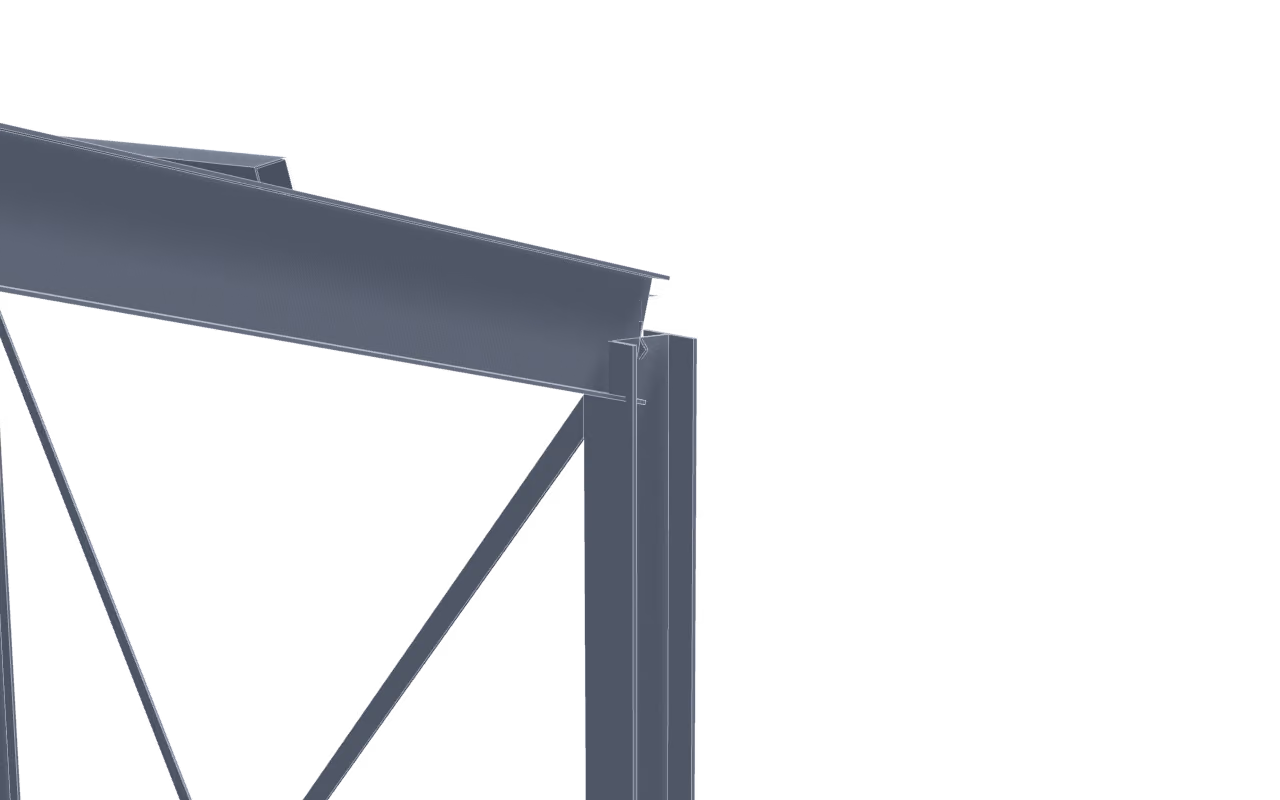
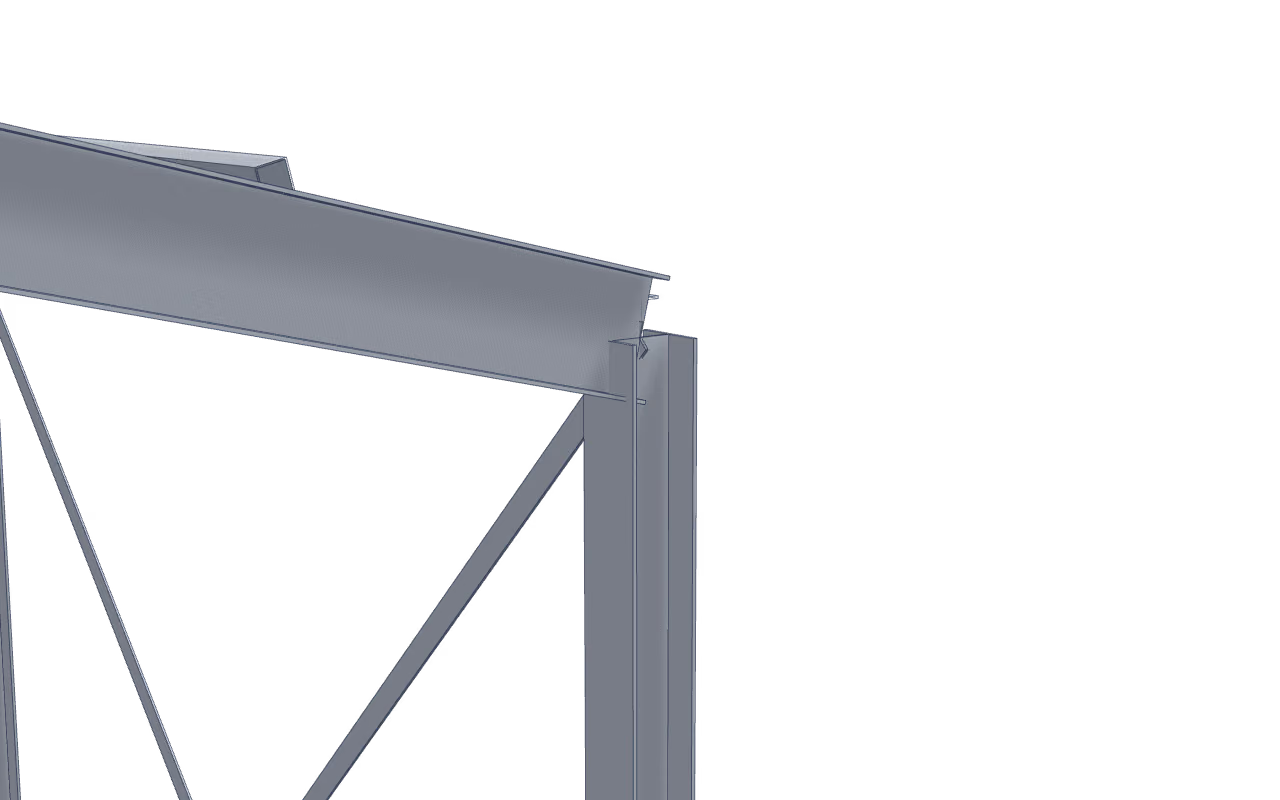
A connection is where a structure's design intent meets its fabrication cost. The same beam-to-column joint can be a shear tab or a full-penetration weld, and the difference is rarely structural — it is a decision about who does the work, how much of it is done in a fixture versus overhead on site, and whether the inspection it triggers is visual or ultrasonic.
Reactions, and what happens when they are missing
The most common gap in a connection design package is the one nobody announces: end reactions that were never issued, so the connection is designed to a percentage of the member capacity instead. That is a legitimate method and it is also how a frame ends up with connections heavier than its members. Where reactions are not available, the assumption used is stated on the calculation, in a place a reviewer cannot miss.
The same applies where the connection lands in concrete. A base plate, an embed or a cast-in anchor is designed here as part of the joint — anchor rod layout and projection, plate thickness, shear transfer, and the breakout the anchorage was sized against. No concrete code is published on this site, so an anchorage check states the demand, the assumed concrete strength and the embedment provided rather than citing a clause.
Buildability is part of the check
A connection that passes every code clause and cannot be assembled is a failed connection. Bolt access, erection fit-up, the order in which two members can be brought together with a crane still holding one of them — these are checked alongside the capacity, and they are why this stage is worth running against a known shop rather than in the abstract.
Pending confirmation
Each of these is held until a fact is confirmed, and named here rather than written around.
HELD — NOT PUBLISHED
- The code a cast-in anchorage is checked against. Anchorage into concrete is engineered here as part of the joint, and every code published on this site is a steel code, so no concrete code is named on a calculation until the owner confirms which apply.
Deliverables, standards and what you supply
- What you receive
- Connection calculations, per connection type and per governing load case
- Connection sketches with bolt grade, weld size, plate thickness and edge distances
- A connection schedule keyed to the joint marks in the model
- Base plate and anchorage design: anchor rod layout, plate thickness, and the demand each was sized against
- The design assumptions, stated: reactions used, code clauses applied, material grades
- Finite-element check output where a connection falls outside a standard method
- What you supply
- Design drawings with end reactions, or the load combinations to derive them from
- The governing code and any project-specific connection criteria
- Bolt and weld preferences, and any grades excluded by the specification
- The selected shop's fabrication constraints, if the shop is already known
- Checked against
- AISC 360
- AWS D1.1
- Eurocode 3
- IS 800
Continuous line: Seimora’s scope Dashed line: By others
Which packages a job’s files can be exchanged with, and in what form, is set out once on the standards page.
What arrives, and what leaves
- Arrives from
- Steel detailing
Member geometry, end reactions and the joint list go to connection design; the resolved connections come back into the same model before any drawing is issued for fabrication. The loop closes in the model, not in a markup.
- Hands on to
- PE/SE stamping and code compliance
Connection calculations and the assumptions behind them are packaged for code compliance review and, where the jurisdiction requires a stamp, for the licensed engineer who will review and seal them.
Start with this work
Send the model or the drawing set and say which of it you want. A single page of scope is a normal way to start; the other practices are there if the job needs them later.