Status Scope of services. Nothing on this site is a record of completed work.
Practice Steel & fabrication engineering
Fabrication coordination
Release packages by lot or erection sequence, the inspection and test plan issued with them, and a production status record reconciled against the release.
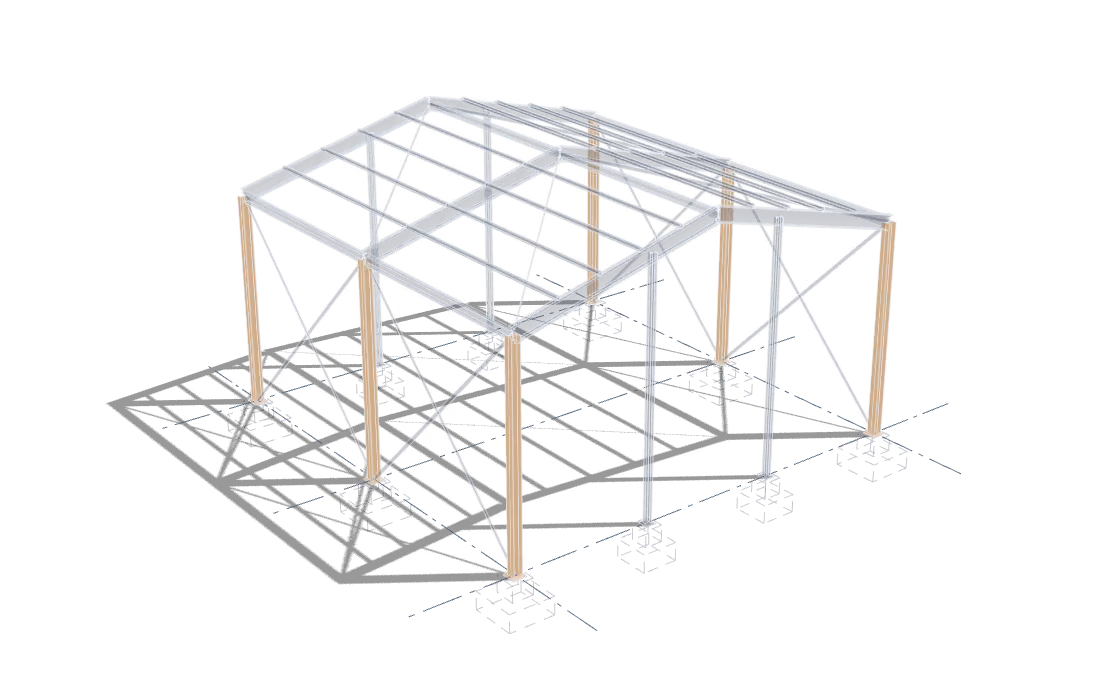
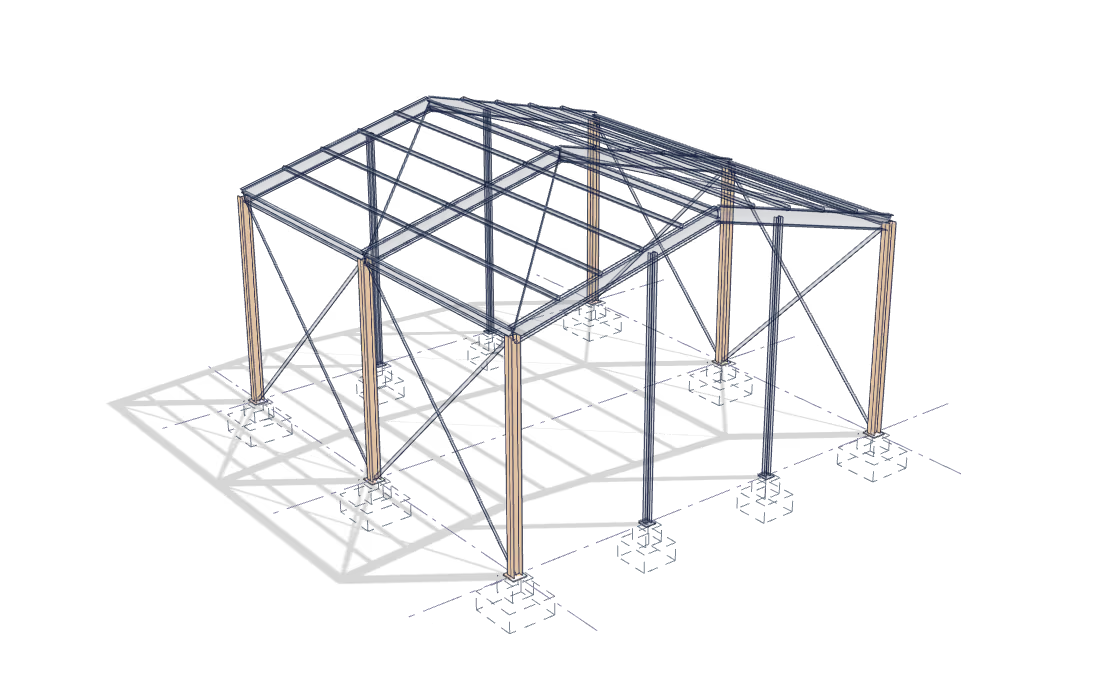
Coordination starts at the moment a drawing stops being a drawing and becomes an instruction to cut steel. Everything before that point is revisable at the cost of an hour. Everything after it is revisable at the cost of material, a machine setup and a slot in a production schedule somebody else is also waiting for.
What a release actually is
A release is not an email with drawings attached. It is a named set — assembly and single-part drawings at a stated revision, the CNC data generated from the same model, the bolt list, the bill of material and the inspection and test plan — issued as one lot on one date, against which everything afterwards is measured. Lots are cut either by erection sequence or by material type, and the choice is not cosmetic: sequence lots suit a site erecting as it receives, material lots suit a shop buying and nesting. A job released as one lot is a job with no way of saying what is late.
The inspection and test plan travels with the release
An inspection and test plan that arrives after the steel does is a plan for work that has already happened. It goes out with the release: which welds are inspected visually and which by a method the specification names, at what frequency, by whom, and which of them are hold points — the points fabrication stops at until the inspection has been recorded. Hold points are the only part of a quality plan that changes what a shop does on the day. The rest is a record made afterwards, and a record made afterwards cannot be a gate.
Status, and where the numbers come from
Production status is reported by the shop. No instrumentation inside a fabricating shop is readable from here, so a status record is compiled from that shop's own returns and reconciled against what was released — fit-up, welding, inspection, coating, despatch, lot by lot. Reconciling is the part that does the work: a shop reporting eighty per cent complete against a release that has since been revised is reporting against a job that no longer exists. Where the two disagree, the record carries both figures and the date each was given, rather than an average of them.
What is not performed here
Seimora owns no fabrication facility. Nothing on this page is fabrication, coating, galvanizing, inspection or freight — those are carried out by the shop and the specialists engaged for the job, and the certifications that work is carried out under are held by a fabricating shop against its own systems. What this page covers is the programme: what was released, to whom, at which revision, what came back and what is still open.
There is nothing to log in to
Production status here is a written record, issued and read. A client portal showing piece-level status across the shops fabricating a job is a roadmap item on this site and is labelled as one wherever it appears.
Pending confirmation
Each of these is held until a fact is confirmed, and named here rather than written around.
HELD — NOT PUBLISHED
- Which fabricating shops a job can be placed with. No fabricator, count, location or capability list is published on this site, so this page describes coordinating a fabrication programme against the shop that will build a job rather than selecting one from a network.
Deliverables, standards and what you supply
- What you receive
- Release packages by lot or by erection sequence, each keyed to the drawing issue it was released against
- The inspection and test plan issued with the release, naming the tests, their frequency and the hold points
- A production status record per lot, compiled from the shop's own returns and reconciled against the release
- A delivery record per shipment, drawn from the packing lists the shop issues, keyed to piece marks
- A release register: what went out, at which revision, on what date, and what is still open against it
- What you supply
- The programme: required-on-site dates, and the erection sequence that sets them
- The shop that will fabricate the job, and the contact in it who reports production status
- Delivery points and any site constraint that limits piece size or load type
- Client-specific fabrication or inspection requirements beyond the governing standard
- The released drawing set, and who decides a change to it after release
- Checked against
- AISC 303
- EN 1090-2
Continuous line: Seimora’s scope Dashed line: By others
Which packages a job’s files can be exchanged with, and in what form, is set out once on the standards page.
Continuous line: Seimora’s scope Dashed line: By others
- Title
- Release package, lot 1: C1 and BP1
- Number
- DEMO-SEI-ZZ-XX-SH-S-0009
- Revision
- P01
What arrives, and what leaves
- Arrives from
- PE/SE stamping and code compliance
A package whose review comments are closed is what gets released to a shop.
- Hands on to
- Closeout documentation
Mill test reports, weld and coating records and the delivery record for each lot go to closeout documentation, so the closeout set is assembled from documents issued during fabrication rather than reconstructed after it.
Start with this work
Send the model or the drawing set and say which of it you want. A single page of scope is a normal way to start; the other practices are there if the job needs them later.