Status Scope of services. Nothing on this site is a record of completed work.
Practice Construction coordination and project controls
Closeout documentation
The as-built model, the drawing set at its final revision and the certificate set, assembled as the job ran rather than chased at the end of it.
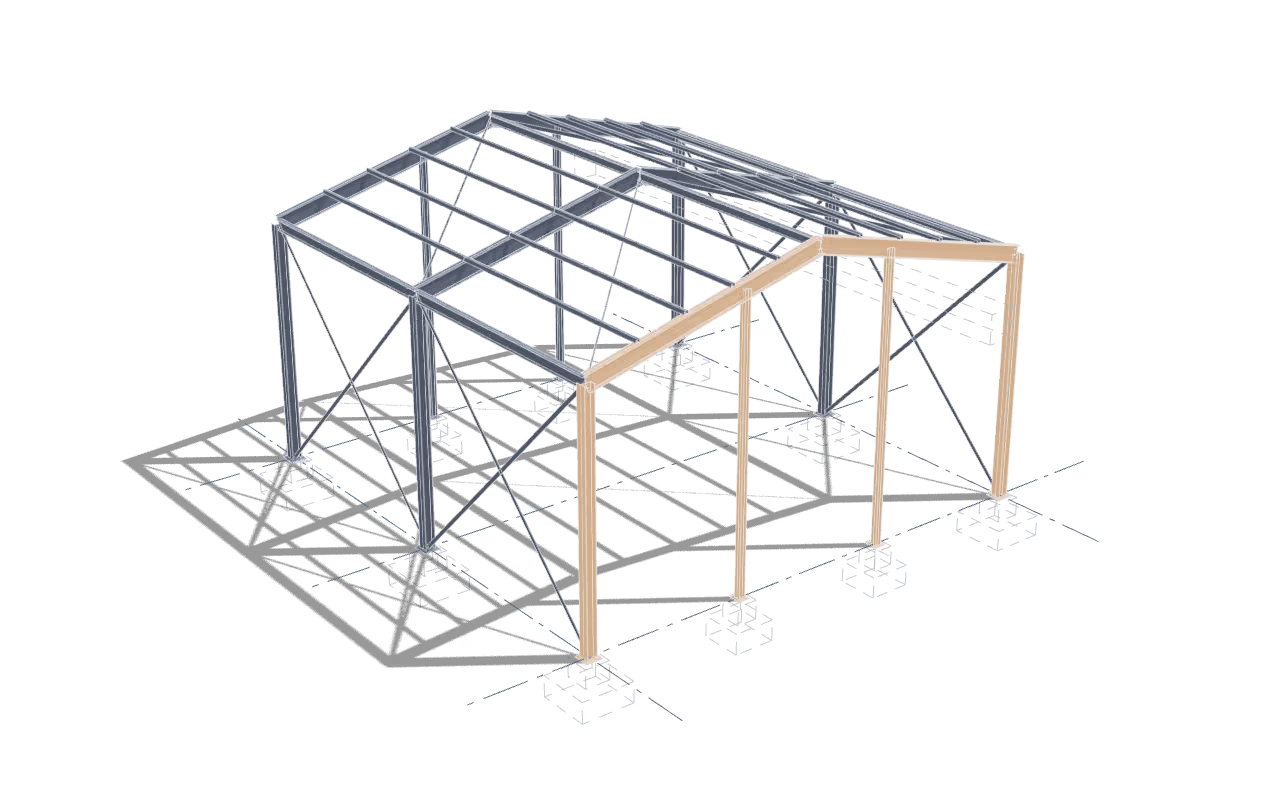
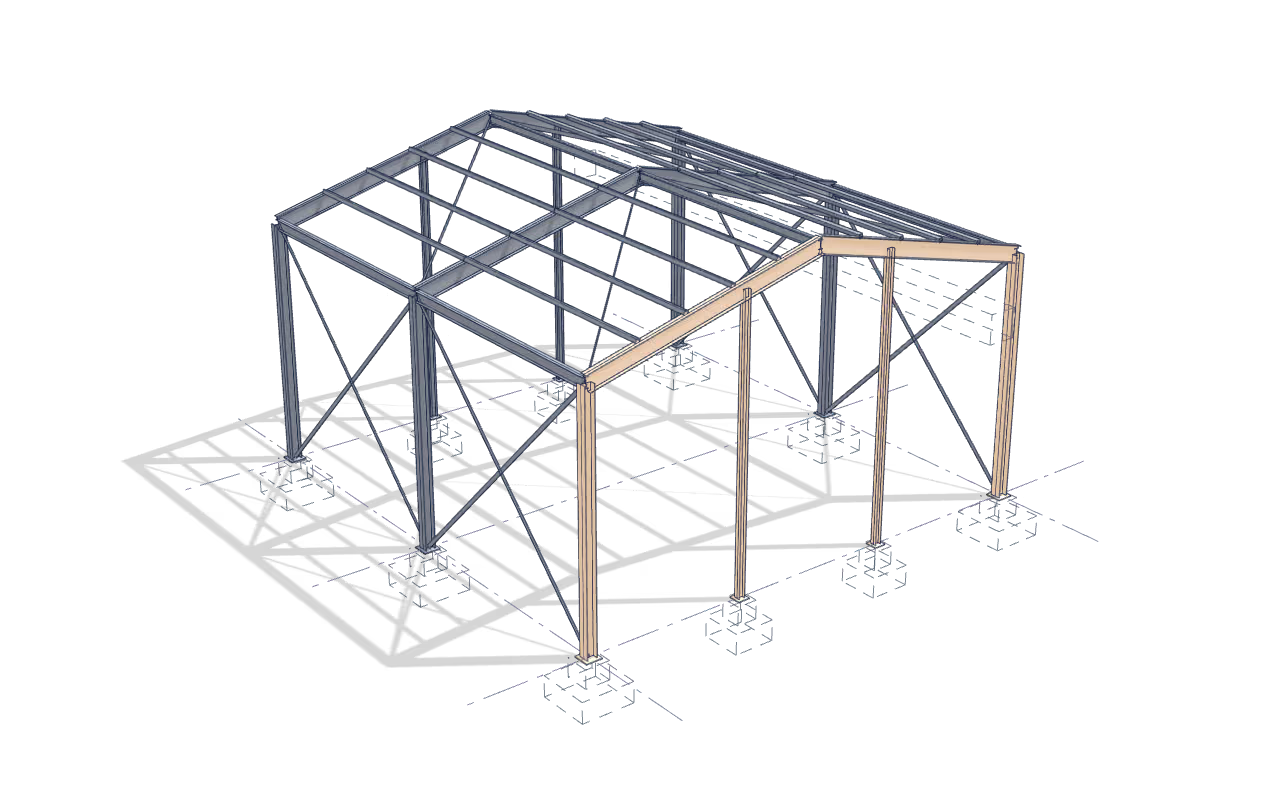
The closeout set is the only part of a job that outlives the job. It is read years later, by people who were not there, usually because something is being modified or something has to be proved. That is the test it should be built for.
Assembled, not reconstructed
Every document in the set already exists by the time this stage starts — the material certificates were filed at goods-in, the weld and NDT records at inspection, the coating records at application, the drawings at each issue. What this stage does is index them against the pieces and the areas they cover and hand over one package instead of a shared folder. Whether that is a day's work or a month's was decided at the start of the job rather than at the end of it: a job whose documents were recorded as they were issued has a closeout set already, and a job whose documents were filed by date has a project to do, staffed by whoever is still there. Document control is where that decision is actually taken.
What each part of the set is assembled from
Nothing in the set is produced here from nothing, and the set says so part by part. The certificate set is the records the shop, the inspector and the coating applicator issued, indexed to the pieces they cover. The delivery records are the packing lists the shop and the carrier issued, keyed to piece marks. The drawing set is the issued revisions, with the superseded ones retained and marked. The as-built model is built from the records the parties issue and, where one exists, from a point cloud somebody else captured — what is done with one is scan to model, and what such a model can and cannot be relied on for is stated there rather than assumed here. A punch list is the same discipline pointed at the building: an item, where it is, which party owns it, what closes it, and the record that it did.
What a digital delivery is not
It is not a login. A client delivery portal is a later phase of this business, described as a roadmap item wherever it appears on this site. What is delivered today is files you hold: a model you can open, a drawing set at a known revision, and a certificate set indexed to the work it covers.
Pending confirmation
Each of these is held until a fact is confirmed, and named here rather than written around.
HELD — NOT PUBLISHED
- The register that indexes this set. An index naming every document in the set, so one certificate can be found without opening the rest, is what makes a closeout package usable — and it is the same register this practice keeps while the job runs, held behind the same commercial boundary as the rest of that list. Until it is settled, what is delivered is the set itself, ordered by the conventions the project already runs.
Deliverables, standards and what you supply
- What you receive
- The as-built model as issued, built from the records the parties issue and the point cloud you supply
- The drawing set at its final revision, with superseded revisions retained and marked as superseded
- The certificate set: mill test reports, weld and NDT records, coating records
- Packing lists and delivery records as issued by the shop and the carrier, keyed to piece marks
- What you supply
- The index your own client or auditor requires, where it differs from the one the project already runs
- The format and the recipient for the final closeout set
- Any as-built survey data you want reflected in the model, and the party that captured it
- The parties who issue each class of record, so the set is indexed to what they sent rather than to what was expected
Continuous line: Seimora’s scope Dashed line: By others
Which packages a job’s files can be exchanged with, and in what form, is set out once on the standards page.
What arrives
- Arrives from
- Fabrication coordination
Mill test reports, weld and coating records and the delivery record for each lot go to closeout documentation, so the closeout set is assembled from documents issued during fabrication rather than reconstructed after it.
- Arrives from
- Document control
The register at its final state, and the transmittal record behind it, go to closeout documentation, so the closeout set is indexed against what was issued rather than against what somebody remembers issuing.
Start with this work
Send the model or the drawing set and say which of it you want. A single page of scope is a normal way to start; the other practices are there if the job needs them later.