Status Scope of services. Nothing on this site is a record of completed work.
Practice BIM & digital delivery
Model coordination
Clash review against a federated set: the rule sets and tolerances a round is run to, issues grouped one per cause, and an owner and a status on each.
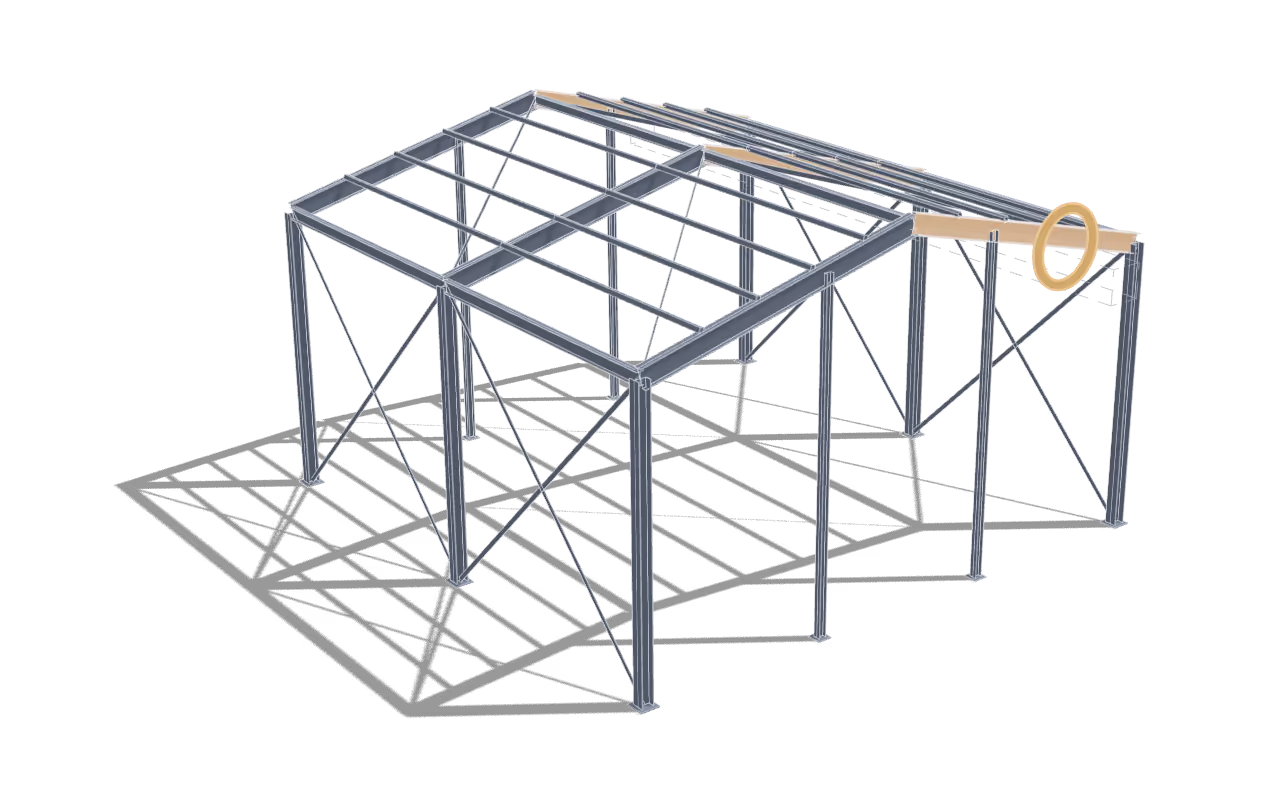
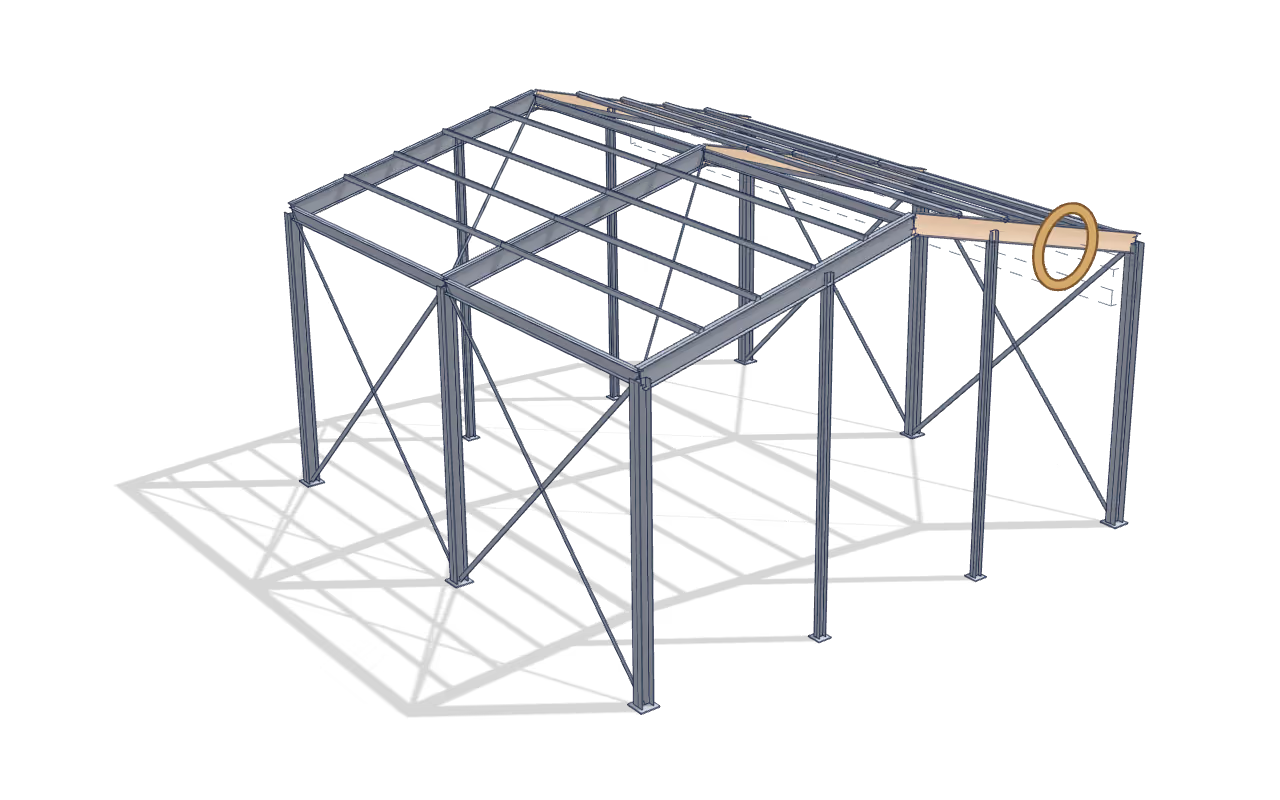
A clash matrix with four thousand hits in it is not a finding. It is a filing problem, and it is what a round produces when nobody has said which pairs of elements matter, at what separation, and who answers each one. The work on this page is turning a comparison between models into a list somebody can close.
What a clash test is actually set to
A test is a pair of element sets and a rule. Structural framing against MEP services — ducting, pipework, containment — is one test; structural framing against its own bracing is another, and the second finds several hundred joints that are meant to touch. So the rule set names which sets are compared with which, whether the test is for hard interference or for a required clearance, and the separation below which a result is a modelling artefact rather than a problem on a site — a three-millimetre overlap between a beam and a hanger is one of those. The rule set is written down and issued with the round, so a later round can be compared with an earlier one instead of being run afresh at different settings and producing a different number.
Grouping is the deliverable, and the count is not
Four thousand results are usually a few dozen causes: one duct route crossing one line of bracing, one riser landing on one beam, one embed placed at the wrong offset in every bay. Grouping is what turns results into issues — one issue per cause, carrying the elements involved, where it is, which models and which revisions it was found between, and what it holds up. A report that names the clashing elements and their location is a document a discipline can act on. A count is a number two parties can argue about, and it falls when somebody widens a tolerance, which is the cheapest way to close a round without fixing anything in it.
An issue has an owner and a status, or it is a screenshot
What leaves a round is an issue carrying a viewpoint — the camera position that shows the thing — the identifiers of the elements involved, the model and revision it was raised against, the date, one named owner, and a status. Those travel as an exchange file rather than as an image pasted into an email, because an image cannot be reopened in the model it came from and cannot tell a reader whether the model has moved since. Where the resolution is structural, the structural answer is what comes back against the issue: the member moved, the opening framed, the connection changed, and the revision it went into.
Whose process this runs inside
A project's coordination process belongs to whoever runs it — a design team lead, or a contractor's VDC manager on a construction-stage model. Seimora does not run that process, does not chair its rounds, and does not decide whose element moves; that decision belongs to the discipline responsible for the element, because it is that discipline which carries the consequence of moving it. What this page covers is the structural side of the round: the model issued into it at a stated revision — built under BIM & digital delivery — the tests set and run against the federated set, the issues raised and grouped, and the structural resolutions returned. Where a project runs no process at all, the comparison is the same and so is the list it produces.
What a round is measured against
A round is worth something only if it has edges: which models, at which revisions, compared on what date. Set beside the round before it, three numbers say something — issues carried forward, issues closed, and issues raised by a model that changed after the last round. The third is the one that says whether a project is converging or circling. A round with no stated issue date cannot be compared with anything, and a set of issues reopened against a newer model looks identical, in a total, to a set nobody answered.
Pending confirmation
Each of these is held until a fact is confirmed, and named here rather than written around.
HELD — NOT PUBLISHED
- The formats an issue exchange can be sent and returned in. The formats this site publishes as moving both ways are model and drawing formats, and no issue-exchange format is among them, so this page describes what an issue carries rather than naming a file the enquiry form will accept.
Deliverables, standards and what you supply
- What you receive
- A clash rule set: which element sets are tested against which, at what tolerance, and what counts as a clearance rather than an interference
- A clash review report naming the clashing elements and where they are, grouped one issue per cause rather than reported as a count
- An issue exchange per round: a viewpoint, the element identifiers, the models and revisions it was raised between, an owner and a status
- The structural resolution on each issue: what moved, what was framed or changed, and the revision it went into
- A round record: which models at which revisions were compared, on what date, and what is still open against it
- What you supply
- The reference models to be federated, in IFC or their native format, each at a stated revision and issue date
- The coordinate origin, grid and levels the federated set is assembled on
- The clearances and tolerances the project works to, where the specification sets any
- Who owns resolution when two disciplines disagree, and who chairs the round
- The issue dates the rounds run to, and the milestone each round is for
Continuous line: Seimora’s scope Dashed line: By others
Which packages a job’s files can be exchanged with, and in what form, is set out once on the standards page.
Continuous line: Seimora’s scope Dashed line: By others
- Title
- Clash report CL-001: duct by others at rafter R1
- Number
- DEMO-SEI-ZZ-XX-RP-Z-0007
- Revision
- P01
What arrives
- Arrives from
- Scan to model
The existing-condition model, its deviation list and the tolerance each element was modelled to go to model coordination, so a new frame is checked against the building that is there rather than against the one the old drawings show.
Start with this work
Send the model or the drawing set and say which of it you want. A single page of scope is a normal way to start; the other practices are there if the job needs them later.